All news

Google updates Gemini Flash line to slash enterprise agent costs
Every token generated by an autonomous software agent adds cost and latency, creating a bottleneck for high-volume production environments. Google is addressing this economic hurdle with the launch of Gemini 3.6 Flash and 3.5 Flash-Lite, two specialized models designed to optimize reasoning throughput for enterprise-grade background tasks.

XRP Ledger Nears July 29 Amendment Activation
With the fixCleanup3_2_0 amendment securing 85.71% support, the XRP Ledger is set to activate a series of critical protocol maintenance updates on July 29. While the network moves toward this threshold, 99 validators have already adopted the v3.2.0 software release to ensure continued compatibility with the evolving ledger.

Bitget Partners with Siebly to Streamline API Development
Bitget has integrated Siebly.io software development kits to simplify how developers build applications for its platform. By providing standardized tools for its V3 Unified Account and V2 Classic APIs, the exchange aims to reduce the technical friction involved in creating automated trading bots and market-data systems.

CFA Institute Maps Out AI-Driven Structural Shifts in Global Finance
Artificial intelligence is doing more than automating office tasks; it is fundamentally altering how capital markets function. The CFA Institute has launched a new research series aimed at helping regulators and industry leaders move beyond reactive measures to address systemic changes in price formation and market integrity.
Raskin Launches Probe Into Epstein’s Alleged Foreign Influence Schemes
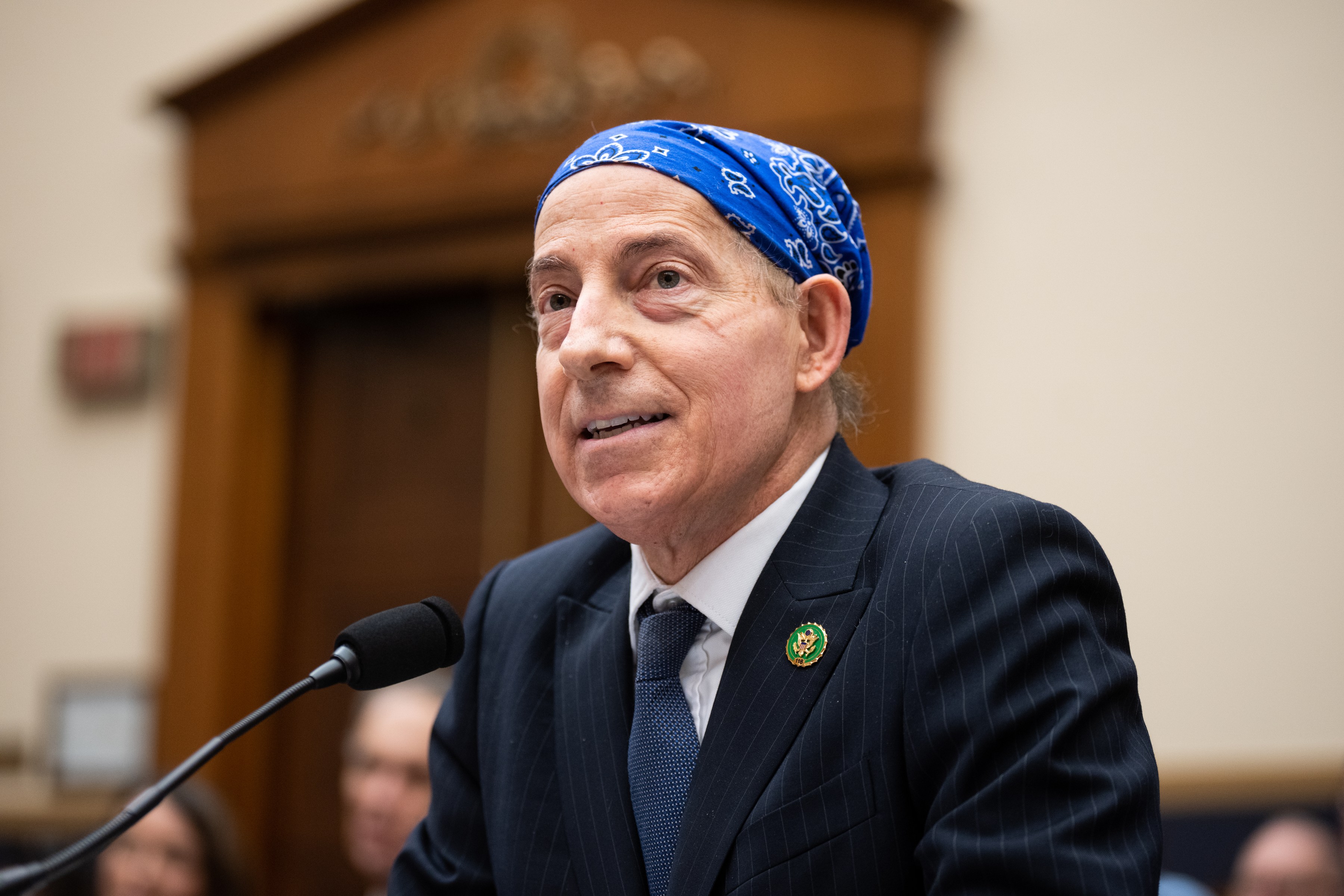
Rep. Jamie Raskin, the ranking Democrat on the House Judiciary Committee, has initiated a formal investigation into whether disgraced financier Jeffrey Epstein acted as an unregistered foreign agent to influence Donald Trump’s first administration, citing substantial evidence of backchannel lobbying for foreign governments.

New Evidence Links Jeffrey Epstein to Israeli Intelligence Operations
While the US House of Representatives weighs the release of further files on Jeffrey Epstein, a cache of 100,000 hacked emails from former Israeli Prime Minister Ehud Barak has exposed the late financier's previously obscured role as a high-level intermediary for Israeli state intelligence and foreign policy objectives.

Julius Baer Shares Slip Despite Record Half-Year Profits
Shares in Julius Baer dropped 3.93 per cent yesterday, despite the Zurich-based private bank posting a record net profit of SFr673 million for the first half of 2026. While the results showed a 128 per cent year-on-year surge, the market reaction signaled investor indifference to the bank's latest financial milestone.

Julius Baer Shares Stumble Despite Record Profitability
Shares of Switzerland’s second-largest bank fell 3 percent Tuesday, even as Julius Baer reported record first-half profits that surpassed analyst expectations. The market reaction highlights a persistent skepticism among investors regarding the sustainability of the bank's growth and the quality of its revenue streams following recent credit losses.
Morpho launches Midnight to bring fixed-term lending to Base
Morpho has deployed its fixed-rate lending protocol, Midnight, on the Base blockchain, marking a strategic shift toward replicating traditional financial credit markets onchain. By enabling direct negotiations between borrowers and lenders, the protocol seeks to move beyond the variable-rate models that currently dominate the decentralized finance landscape.

GOP Budget Law Triggers Food Insecurity Crisis Across US
New federal budget mandates have ignited a surge in food insecurity across the United States, as states scramble to navigate punishing new penalties for SNAP administrative errors. The resulting bureaucratic bottleneck is stripping benefits from hundreds of thousands of vulnerable residents, forcing families to choose between skipping meals and paying rent.

Celsius-backed Ionic Digital clears final hurdle for Nasdaq debut
Former Celsius Network creditors are approaching a long-awaited liquidity event as Ionic Digital secures SEC approval for a Nasdaq direct listing on July 28. Trading under the ticker IOND, the company will open the market to existing shareholders without the traditional price-stabilizing mechanisms of an underwritten initial public offering.

Aztec v5 Launches Alpha to Bring Private Smart Contracts to Ethereum
Aztec Labs has deployed the alpha version of its v5 execution layer, introducing a programmable privacy framework that enables Ethereum applications to process confidential data alongside public state. By shifting computation to user devices, the system utilizes zero-knowledge proofs to verify transactions without exposing sensitive inputs to the network.

The AI Slot Machine: How Generative Interfaces Fragment Deep Work
You open a generative AI tool to resolve a quick query, only to find yourself trapped in a loop of prompts and refinements forty minutes later. This cycle is not an accident of user behavior, but a core design feature of modern platforms built to maximize time on site over task completion.
Amnesty Demands Probe Into Disappearance of Ecuadorian Fishing Boat
Eight fishermen remain missing months after their vessel, the Fiorella, vanished under a plume of smoke during the U.S.-led Operation Southern Spear. Amnesty International is now demanding a formal investigation, citing mounting evidence that the boat was targeted by U.S. forces in a campaign marked by silence and alleged human rights abuses.

Russia Finalizes Legislative Framework for Cryptocurrency Market
The State Duma has passed a sweeping cryptocurrency bill in its final readings, establishing a regulated environment for digital asset trading, custody, and cross-border commercial settlements. Scheduled for a September 1, 2026, rollout, the legislation marks a shift from informal market activity toward strict oversight by the Bank of Russia.

Robinhood Chain Hits $9B in Trading Volume Weeks After Launch
Three weeks after its mainnet launch, Robinhood Chain has surged to nearly $9 billion in cumulative decentralized exchange volume. While the Ethereum Layer 2 network aims to become a hub for tokenized real-world assets, speculative memecoin trading currently accounts for more than 80% of its activity.
/filters:format(webp)/mayapuri/media/media_files/2025/11/24/devendra-fadnavis-2025-11-24-15-45-14.jpg)
Maharashtra Drafts India's First Property Tokenization Law
Maharashtra is moving to become India’s first state to codify blockchain-based property ownership, with Deputy Chief Minister Devendra Fadnavis commissioning a specialized legal framework to digitize land assets. The proposed DELTA Act aims to unlock stagnant capital by enabling fractional investment through tokenized real estate interests.

Dogecoin Founder Rejects Mining Overhaul Amid Price Volatility
Billy Markus, co-founder of Dogecoin, has publicly dismissed proposals to abandon the network’s merged mining architecture, labeling such efforts as aimless. As community members debate the technical reliance on Litecoin’s infrastructure, the asset is seeing a shift in market sentiment driven by whale accumulation and technical buy signals.

Bristol Myers Squibb upgrades to Nvidia’s Vera Rubin AI architecture
Bristol Myers Squibb is set to become the first life sciences company to deploy Nvidia’s DGX SuperPOD based on the advanced Vera Rubin architecture. The pharmaceutical giant plans to integrate this high-performance computing cluster to accelerate drug discovery, protein modeling, and large-molecule development across its global research facilities.
CoinShares Targets Institutional Capital with New European UCITS Platform
By launching a regulated Bitcoin mining ETF on Deutsche Börse Xetra, CoinShares has officially entered Europe’s €26.3 trillion UCITS market. The move bypasses the rigid internal mandates that have long prevented pension funds, insurers, and private banks from accessing digital asset strategies through traditional investment channels.

Representative John Larson Moves to Defund Unauthorized War on Iran
Democratic Representative John Larson is launching a two-pronged legal and legislative offensive against the Trump administration’s military campaign in Iran. Challenging the legality of a conflict waged without congressional authorization for five months, Larson aims to block federal funding as the White House seeks new war appropriations.

United Stables taps Chainlink as U stablecoin hits $1B milestone
After its U stablecoin breached $1 billion in circulating supply and $2.5 billion in daily trading volume, United Stables has selected Chainlink as its primary infrastructure provider. The partnership aims to bolster the asset's security and transparency through decentralized oracle services and future cross-chain interoperability.

Ant International Secures $1.2 Billion to Scale Global Fintech
Ant International has finalized a $1.2 billion Series A funding round, drawing support from parent company Ant Group, Alibaba, and a group of global investors. The capital injection arrives as the Singapore-based firm aggressively pursues artificial intelligence integration and the expansion of its blockchain-powered cross-border payment infrastructure across international markets.
Washington’s shadow over Chinese open-weight AI
The July 16 release of Moonshot AI’s Kimi K3 has reignited a dormant debate in Washington over the safety and legitimacy of Chinese open-weight models. As enterprises weigh the potential for massive inference savings, officials are quietly exploring regulatory pressure to limit the adoption of these models within American infrastructure.

Washington Judge Blocks Kalshi Sports Betting Markets
A King County Superior Court judge has issued a preliminary injunction against Kalshi, ruling that the platform’s sports-related prediction contracts likely violate Washington state gambling laws. The decision represents a significant legal setback for the company, which maintains that federal commodities regulations should preempt local oversight of its exchange.

South Korea’s CBDC Pilot Faced No Independent Security Audit
South Korea’s inaugural central bank digital currency (CBDC) pilot program proceeded without an independent government security inspection. Documents submitted by the Financial Supervisory Service to lawmaker Lee Heon-seung reveal that participating lenders relied primarily on their own internal reviews to validate the system’s integrity during the testing phase.

Hanwha Becomes Largest Securitize Shareholder as Tokenization Bets Grow
South Korean conglomerate Hanwha Group has emerged as the primary shareholder in tokenization firm Securitize, controlling a 9.6% stake through a complex network of affiliates. The move signals a major strategic pivot for the group as it aggressively expands its influence across the global digital asset and Web3 infrastructure landscape.

Bernie Sanders pivots to campaign against crypto industry influence
Senator Bernie Sanders has declared the cryptocurrency industry a primary target for his 2026 election cycle agenda, grouping digital asset firms alongside AI developers and AIPAC as billionaire-backed entities that threaten to distort the democratic process through massive, targeted political spending.

UK Parliament Launches Probe Into Bank Hostility Toward Crypto Firms
UK lawmakers have launched a cross-party inquiry into whether retail and commercial banks are unfairly throttling access for cryptocurrency businesses. Chaired by Lord Vaizey of Didcot and Labour MP Gurinder Singh Josan, the probe seeks to determine if current payment restrictions and account closures are hindering legitimate industry innovation.

Wanchain Bridge Exploit Drains $9 Million in NIGHT Tokens
A security breach targeting the Wanchain Cardano-to-BNB Chain bridge has resulted in the unauthorized withdrawal of 515 million NIGHT tokens. The exploit, identified by blockchain security firm BlockSec, triggered a sharp 30% decline in the token’s market value as investors reacted to the potential vulnerability in validator logic.