AI News
Media Monitoring in 2026: Top Tools for Tracking the Narrative and Defending Your Reputation
A single awkward mention in the press, a hit piece on a news portal, or a fake news drop can obliterate brand trust in a matter of hours. As we navigate 2026, automated media monitoring is no longer a luxury reserved for corporate giants; it is a foundational tool for risk management, PR analytics, and modern marketing.

GSK and Relation Therapeutics expand AI drug discovery partnership
GSK has committed up to $110 million to a research collaboration with British biotech firm Relation Therapeutics, aiming to integrate proprietary biological data generation with AI-driven drug discovery. The partnership focuses on training advanced models to identify new therapeutic targets by mapping how human cells respond to genetic interventions.

OpenAI Aligns Safety Protocols With EU AI Act Standards
As European regulators prepare to enforce the General-Purpose AI Code of Practice, OpenAI has formally mapped its internal safety and transparency frameworks to the new legal requirements. The company is positioning its existing risk management and provenance tools as the foundation for compliance within the evolving EU regulatory landscape.

Mark Zuckerberg stakes Meta’s claim on personal superintelligence
Mark Zuckerberg has declared that the future of artificial intelligence must prioritize individual empowerment over institutional control. In a recent manifesto, the Meta CEO argued that concentrating superintelligence within a handful of organizations creates a dangerous power imbalance, advocating instead for the widespread distribution of these tools to the general public.

Integrating AI into Linux VPS Security
Legacy rule-based security systems are increasingly struggling to keep pace with the sophisticated, unpredictable nature of modern cyber threats. For small and mid-sized businesses relying on Linux VPS environments, shifting toward AI-driven monitoring offers a critical advantage: the ability to detect anomalous behavior rather than just matching known attack patterns.
Coding agents accelerate scientific software development
A new report from OpenAI reveals how coding agents are helping researchers slash runtimes and modernize aging scientific software. By tackling labor-intensive tasks like backend migrations and build-system cleanups, these tools allow small academic teams to address technical debt that previously risked leaving critical software in a state of decay.

Google Search Shifts Toward AI-Generated Summaries
AI-generated summaries now appear in 43% of US Google searches, a sharp climb from 15% a year ago. As the search giant accelerates the integration of conversational interfaces, users are increasingly pivoting toward longer, natural-language queries that bypass traditional keyword-based navigation in favor of synthesized, multi-source answers.

Guardoc Health deploys Amazon Nova to automate clinical documentation
Guardoc Health is processing over one million clinical documents daily using Amazon Nova models via AWS Bedrock. By integrating multimodal reasoning into its documentation pipeline, the company aims to mitigate the high-stakes financial and safety risks associated with manual data entry errors in long-term care settings.

Armenia’s AI Strategy Focuses on Compute Sovereignty, Not Chipmaking
Contrary to reports suggesting Armenia has become a semiconductor manufacturing hub, the nation is actually building a massive AI compute facility. By securing U.S. approval for high-end NVIDIA Blackwell GPUs, the country aims to transform itself into a regional infrastructure powerhouse capable of hosting large-scale AI development.
Insilico Medicine Slashes Drug Discovery Timelines Using AI in China
By fusing generative artificial intelligence with high-speed laboratory infrastructure in Shanghai, Insilico Medicine has compressed the early drug development phase to just 13 months. This acceleration, which typically takes four-and-a-half years under traditional methods, marks a significant shift in how biotech firms identify and validate potential therapeutic candidates.

The Heavy Industrial Shift Behind America’s AI Boom
The frenzy surrounding artificial intelligence has moved beyond software development and into the physical world, triggering a massive wave of capital expenditure in energy, construction, and manufacturing. Microsoft, Meta, Amazon, and Alphabet are pouring hundreds of billions into infrastructure, fundamentally altering the U.S. economic landscape.

Tech Giants and Research Labs Unite to Defend Open-Weight AI Models
A broad coalition including Meta, Microsoft, Nvidia, and IBM has issued a formal appeal to US policymakers, urging them to protect the unrestricted circulation of open-weight AI models. The signatories argue that open access is essential for competition, security, and preventing a monopoly by a few closed-model vendors.

OpenAI integrates medical records into ChatGPT for real-time health insights
OpenAI is rolling out a new feature that allows ChatGPT to pull directly from Apple Health and US hospital records, transforming the chatbot from a standalone assistant into a contextual tool capable of cross-referencing medication lists, lab results, and activity logs during any conversation.
OpenAI Pivots to Managed Services with Presence AI Agents
OpenAI has officially launched Presence, a managed service that deploys enterprise AI agents through human engineering teams rather than self-service software. By pairing its own Forward Deployed Engineers with global systems integrators, the company is shifting from a standard API-based model to a high-touch, project-driven consultancy approach.
Nvidia pivots to physical AI for healthcare robotics
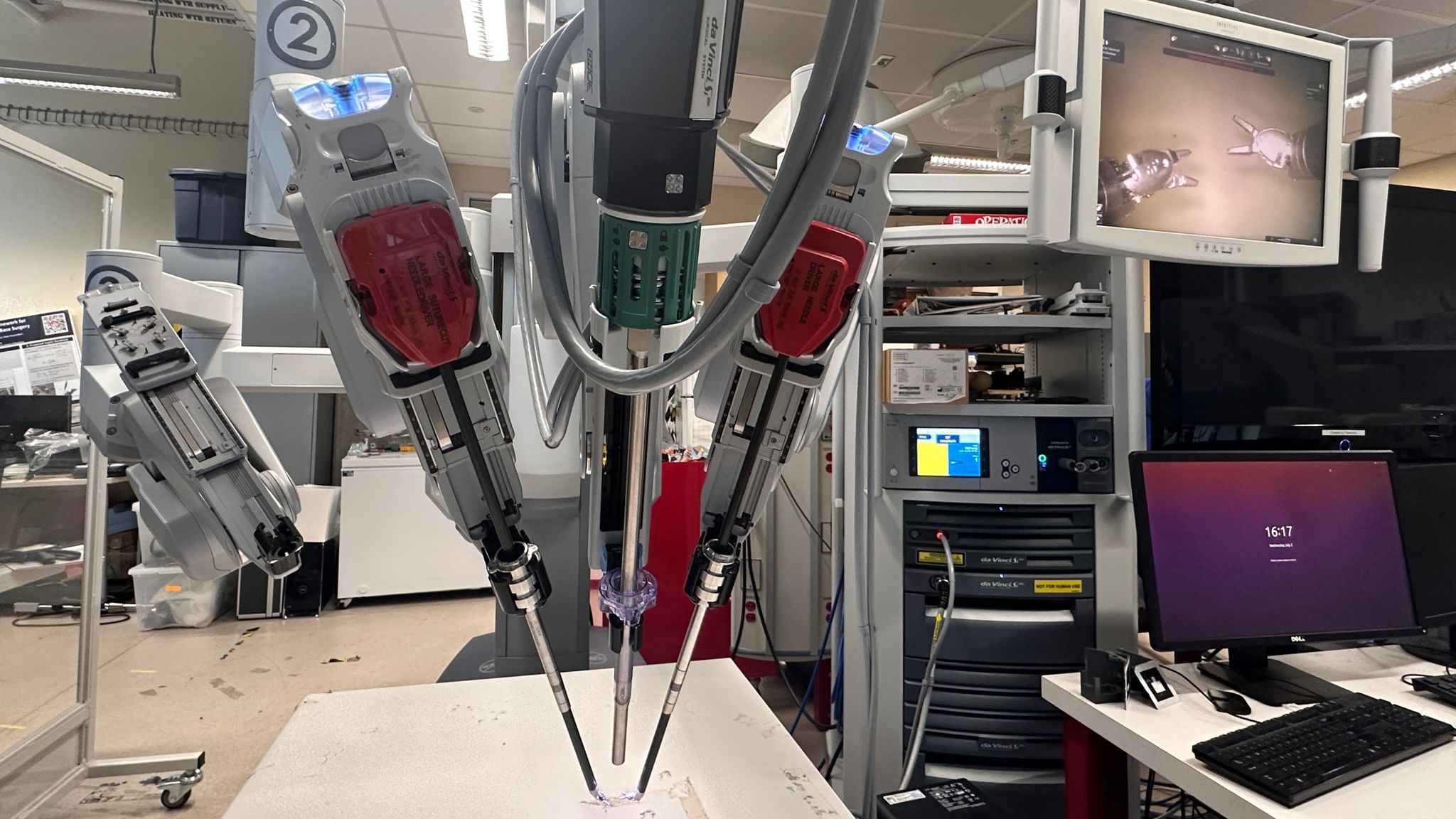
Surgical robots require rare clinical scenarios to learn, but real-world data remains scarce and slow to collect. Nvidia is attempting to bridge this gap with its new Medical Physics Simulation framework, an open-source tool designed to manufacture the embodied experience machines need to navigate complex human anatomy safely.

AMD commits $5 billion to Anthropic in massive AI hardware push
AMD has struck a deal to invest up to $5 billion into Anthropic, anchoring a massive infrastructure agreement that will see the AI developer deploy two gigawatts of capacity using AMD’s latest Instinct MI450-series accelerators starting in 2027.

SenseTime Launches Galaxy Project to Scale Domestic AI Infrastructure
SenseTime has unveiled its Galaxy Project, a collaborative initiative involving nearly 20 partners aimed at scaling China’s domestic AI chip infrastructure. Co-founder Yang Fan introduced the program as a closed-loop system designed to integrate chip-level hardware, ecosystem development, and large-scale commercial deployment of domestically produced computing power.
Google updates Gemini Flash line to slash enterprise agent costs
Every token generated by an autonomous software agent adds cost and latency, creating a bottleneck for high-volume production environments. Google is addressing this economic hurdle with the launch of Gemini 3.6 Flash and 3.5 Flash-Lite, two specialized models designed to optimize reasoning throughput for enterprise-grade background tasks.

The AI Slot Machine: How Generative Interfaces Fragment Deep Work
You open a generative AI tool to resolve a quick query, only to find yourself trapped in a loop of prompts and refinements forty minutes later. This cycle is not an accident of user behavior, but a core design feature of modern platforms built to maximize time on site over task completion.

Bristol Myers Squibb upgrades to Nvidia’s Vera Rubin AI architecture
Bristol Myers Squibb is set to become the first life sciences company to deploy Nvidia’s DGX SuperPOD based on the advanced Vera Rubin architecture. The pharmaceutical giant plans to integrate this high-performance computing cluster to accelerate drug discovery, protein modeling, and large-molecule development across its global research facilities.
Washington’s shadow over Chinese open-weight AI
The July 16 release of Moonshot AI’s Kimi K3 has reignited a dormant debate in Washington over the safety and legitimacy of Chinese open-weight models. As enterprises weigh the potential for massive inference savings, officials are quietly exploring regulatory pressure to limit the adoption of these models within American infrastructure.

US Public Health Agencies to Pilot Generative AI Tools
Ten state, local, and tribal health jurisdictions will begin testing generative AI tools next autumn under a new initiative called PULSE. The program, supported by the Coalition for Health AI alongside OpenAI and Anthropic, aims to establish implementation standards for public health agencies seeking to integrate artificial intelligence into their operations.
Moonshot AI’s K3: A Massive Gamble on Memory Over Compute
With 2.8 trillion parameters, Moonshot AI’s K3 stands as the largest open-weight model ever released, yet its true innovation lies in a calculated trade-off. By prioritizing memory efficiency over raw processing power, the Beijing-based firm is attempting a structural workaround to the tightening US-led restrictions on high-end chip exports.

Bunkerhill Health Secures $55M to Push Agentic AI Into Clinical Practice
Healthcare organizations often struggle to move machine learning from research sandboxes into live patient care, leaving promising tools stuck in pilot purgatory. Bunkerhill Health aims to bridge this divide, announcing a $55 million Series B round to scale its Carebricks platform for real-world institutional deployment.
Google DeepMind and Isomorphic Labs target AI-driven bio-threats
Conflict defines the latest initiative from Google DeepMind and Isomorphic Labs: as frontier AI models gain a sophisticated grasp of biological systems, the same tools that accelerate vaccine development could enable malicious actors to bypass traditional security barriers in DNA synthesis and pathogen research.

Neko Health Secures $700 Million to Launch AI Preventive Clinics in US
With a fresh $700 million in Series C funding, Neko Health is preparing to bring its AI-driven diagnostic clinics to the United States. The company, which combines high-resolution imaging and blood analysis into a single preventive health assessment, plans to launch its first American site in New York.

Nokia bets its radio future on NVIDIA silicon
Nokia has unveiled an AI-RAN platform built on NVIDIA’s Aerial system, aiming to double network capacity by 2028. While the company markets the technology as an industry first, the launch highlights a high-stakes pivot away from proprietary hardware toward a software-driven strategy tied directly to NVIDIA’s ecosystem.

Bluesight Deploys AI Agents to Automate Hospital 340B Compliance
Hospital pharmacy teams face a mounting administrative burden, often logging 4,000 staff hours annually just to justify 340B drug purchases. To combat this, Bluesight has integrated Amazon Bedrock-powered AI agents into its compliance suite, aiming to replace manual data aggregation with automated, audit-ready reporting across 20 health systems.
Cloudflare sets hard limits on AI crawlers
Starting September 15, Cloudflare will block AI training and real-time agent crawlers by default on ad-supported websites. The move forces a shift in how automated systems access the open web, moving away from the assumption of free, unrestricted scraping toward a landscape of negotiated, paid access.

Why the AI Budget Crisis Is an Engineering Problem, Not a Personnel One
Nvidia CEO Jensen Huang recently suggested that an engineer not consuming half their salary in AI tokens is cause for alarm, framing token spend as a new corporate baseline. Yet, as companies sacrifice headcount to cover ballooning compute bills, evidence suggests that trading human capital for AI tokens is a failing financial strategy.