AI News

UnitedHealthcare scales up AI assistant for 21 million members
UnitedHealthcare has expanded access to its generative AI assistant, Avery, to 21 million members across commercial, Medicare, and Medicaid plans. The rollout follows a seven-month pilot program during which the insurer claimed a 90% resolution rate for member inquiries, effectively bypassing the need for human representative intervention in those instances.

Microsoft exits Essex AI site as grid constraints stall UK ambition
Microsoft has withdrawn as the anchor tenant for Nscale’s £2bn data center project in Essex, citing a critical lack of available power. Developers face a stark reality where national grid capacity for high-energy compute projects will not be sufficient until the early-to-mid 2030s, threatening the UK's sovereign AI infrastructure goals.

OpenAI Partners With Poland’s NASK to Bolster AI Safety Research
By granting Polish researchers early access to frontier models, OpenAI is formalizing a partnership with Poland’s NASK to stress-test artificial intelligence systems. The collaboration focuses on identifying vulnerabilities in real-world infrastructure and developing safeguards against malicious synthetic content, signaling a push for international standards in AI security.

Microsoft AI system outpaces doctors in diagnostic accuracy trials
A new diagnostic tool from Microsoft has outperformed generalist physicians in clinical simulations, correctly identifying 83.2% of complex medical cases compared to the 36.1% success rate of doctors using reference materials. The system, MAI-DxO, mimics a panel of specialists to navigate patient history and testing requirements in real-time.

State Legislatures Race to Fill the Federal AI Regulatory Void
With Congress stalled on comprehensive tech policy, US states have surged to the forefront of AI governance, introducing 1,539 bills in 2026. This legislative explosion has forced companies to navigate a fragmented landscape of state-specific rules, as local lawmakers attempt to steer the development of rapidly evolving frontier models.

Sebastian Schmidt on grounding enterprise AI in scientific evidence
Consumer-grade generative AI models prioritize speed over accuracy, but pharmaceutical and legal research demands absolute precision. Sebastian Schmidt, EVP of Enterprise at Digital Science, argues that enterprise systems must move beyond superficial text generation by anchoring every AI-driven insight in verifiable, peer-reviewed scientific data.

Germany and NVIDIA Partner to Advance Industrial Physical AI
Chancellor Friedrich Merz and NVIDIA CEO Jensen Huang have signed a formal declaration in Berlin to integrate cutting-edge artificial intelligence into German manufacturing. The agreement aims to merge the nation’s engineering heritage with advanced physical AI models, positioning the country as a global hub for industrial automation.

Sarawak expands voice AI trials for government services
4,056 calls to an internal ICT helpdesk have provided the foundation for Sarawak’s next phase of voice AI testing. Following a two-month proof of concept, Sarawak Information Systems Sdn Bhd and 8nabler are now moving to address technical gaps in regional dialects and data governance before considering a public rollout.

UK Science Council Warns Against AI Dependency
The UK risks being relegated to a high-value customer rather than a strategic leader in artificial intelligence, according to the Council for Science and Technology. In a formal dispatch to Minister for Artificial Intelligence Kanishka Narayan, the advisory body argues that current domestic policy lacks the necessary sovereignty to ensure long-term resilience.
Anthropic Launches Public Benefit Fund Tied to Valuation Growth
Anthropic is placing five percent of its equity into a newly formed Public Benefit Fund, a move designed to scale corporate philanthropy alongside the company’s financial success. Pending stockholder approval, this stake will increase by two percent for every 50 percent gain in valuation, tethering future social impact directly to growth.

Anthropic Establishes Singapore Hub to Accelerate Government AI
With Claude usage rates nearly six times higher than global demographic projections, Anthropic has opened a formal commercial office in Singapore. The move solidifies a strategic partnership with the city-state’s government, focusing on high-stakes software deployment and strict data compliance across the public and private sectors.

NTT Data: Scaling AI Beyond the Pilot Phase
Nearly 60% of organizations remain trapped in isolated AI pilot programs, unable to bridge the gap between experimental tools and enterprise-wide execution. According to NTT Data’s latest Insights and Vision Report, the primary barrier is not technical capability but a lack of unified governance and poor data foundations.
Media Monitoring in 2026: Top Tools for Tracking the Narrative and Defending Your Reputation
A single awkward mention in the press, a hit piece on a news portal, or a fake news drop can obliterate brand trust in a matter of hours. As we navigate 2026, automated media monitoring is no longer a luxury reserved for corporate giants; it is a foundational tool for risk management, PR analytics, and modern marketing.

GSK and Relation Therapeutics expand AI drug discovery partnership
GSK has committed up to $110 million to a research collaboration with British biotech firm Relation Therapeutics, aiming to integrate proprietary biological data generation with AI-driven drug discovery. The partnership focuses on training advanced models to identify new therapeutic targets by mapping how human cells respond to genetic interventions.

OpenAI Aligns Safety Protocols With EU AI Act Standards
As European regulators prepare to enforce the General-Purpose AI Code of Practice, OpenAI has formally mapped its internal safety and transparency frameworks to the new legal requirements. The company is positioning its existing risk management and provenance tools as the foundation for compliance within the evolving EU regulatory landscape.

Mark Zuckerberg stakes Meta’s claim on personal superintelligence
Mark Zuckerberg has declared that the future of artificial intelligence must prioritize individual empowerment over institutional control. In a recent manifesto, the Meta CEO argued that concentrating superintelligence within a handful of organizations creates a dangerous power imbalance, advocating instead for the widespread distribution of these tools to the general public.

Integrating AI into Linux VPS Security
Legacy rule-based security systems are increasingly struggling to keep pace with the sophisticated, unpredictable nature of modern cyber threats. For small and mid-sized businesses relying on Linux VPS environments, shifting toward AI-driven monitoring offers a critical advantage: the ability to detect anomalous behavior rather than just matching known attack patterns.
Coding agents accelerate scientific software development
A new report from OpenAI reveals how coding agents are helping researchers slash runtimes and modernize aging scientific software. By tackling labor-intensive tasks like backend migrations and build-system cleanups, these tools allow small academic teams to address technical debt that previously risked leaving critical software in a state of decay.

Google Search Shifts Toward AI-Generated Summaries
AI-generated summaries now appear in 43% of US Google searches, a sharp climb from 15% a year ago. As the search giant accelerates the integration of conversational interfaces, users are increasingly pivoting toward longer, natural-language queries that bypass traditional keyword-based navigation in favor of synthesized, multi-source answers.

Guardoc Health deploys Amazon Nova to automate clinical documentation
Guardoc Health is processing over one million clinical documents daily using Amazon Nova models via AWS Bedrock. By integrating multimodal reasoning into its documentation pipeline, the company aims to mitigate the high-stakes financial and safety risks associated with manual data entry errors in long-term care settings.

Armenia’s AI Strategy Focuses on Compute Sovereignty, Not Chipmaking
Contrary to reports suggesting Armenia has become a semiconductor manufacturing hub, the nation is actually building a massive AI compute facility. By securing U.S. approval for high-end NVIDIA Blackwell GPUs, the country aims to transform itself into a regional infrastructure powerhouse capable of hosting large-scale AI development.
Insilico Medicine Slashes Drug Discovery Timelines Using AI in China
By fusing generative artificial intelligence with high-speed laboratory infrastructure in Shanghai, Insilico Medicine has compressed the early drug development phase to just 13 months. This acceleration, which typically takes four-and-a-half years under traditional methods, marks a significant shift in how biotech firms identify and validate potential therapeutic candidates.

The Heavy Industrial Shift Behind America’s AI Boom
The frenzy surrounding artificial intelligence has moved beyond software development and into the physical world, triggering a massive wave of capital expenditure in energy, construction, and manufacturing. Microsoft, Meta, Amazon, and Alphabet are pouring hundreds of billions into infrastructure, fundamentally altering the U.S. economic landscape.

Tech Giants and Research Labs Unite to Defend Open-Weight AI Models
A broad coalition including Meta, Microsoft, Nvidia, and IBM has issued a formal appeal to US policymakers, urging them to protect the unrestricted circulation of open-weight AI models. The signatories argue that open access is essential for competition, security, and preventing a monopoly by a few closed-model vendors.

OpenAI integrates medical records into ChatGPT for real-time health insights
OpenAI is rolling out a new feature that allows ChatGPT to pull directly from Apple Health and US hospital records, transforming the chatbot from a standalone assistant into a contextual tool capable of cross-referencing medication lists, lab results, and activity logs during any conversation.
OpenAI Pivots to Managed Services with Presence AI Agents
OpenAI has officially launched Presence, a managed service that deploys enterprise AI agents through human engineering teams rather than self-service software. By pairing its own Forward Deployed Engineers with global systems integrators, the company is shifting from a standard API-based model to a high-touch, project-driven consultancy approach.
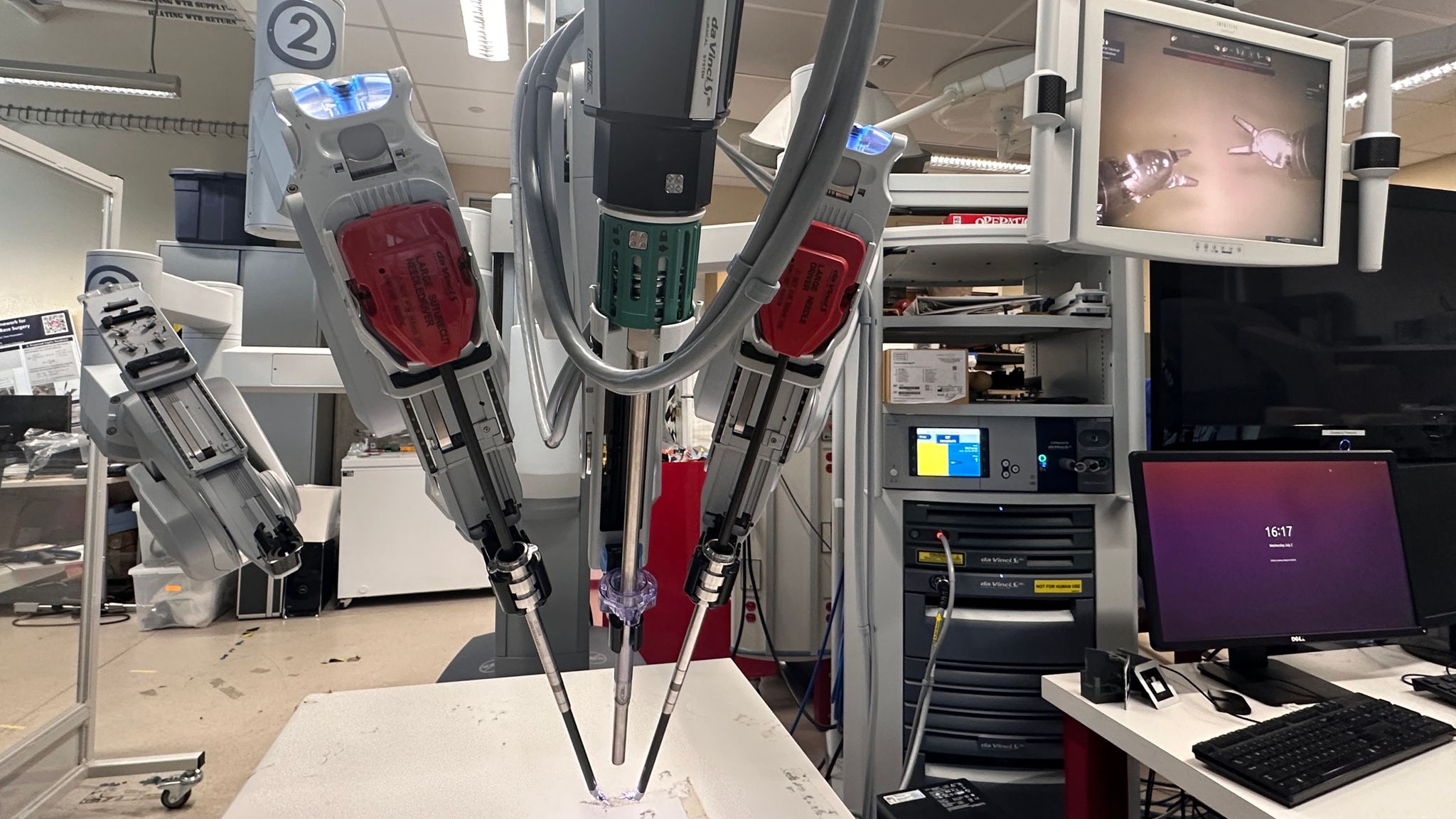
Nvidia pivots to physical AI for healthcare robotics
Surgical robots require rare clinical scenarios to learn, but real-world data remains scarce and slow to collect. Nvidia is attempting to bridge this gap with its new Medical Physics Simulation framework, an open-source tool designed to manufacture the embodied experience machines need to navigate complex human anatomy safely.

AMD commits $5 billion to Anthropic in massive AI hardware push
AMD has struck a deal to invest up to $5 billion into Anthropic, anchoring a massive infrastructure agreement that will see the AI developer deploy two gigawatts of capacity using AMD’s latest Instinct MI450-series accelerators starting in 2027.

SenseTime Launches Galaxy Project to Scale Domestic AI Infrastructure
SenseTime has unveiled its Galaxy Project, a collaborative initiative involving nearly 20 partners aimed at scaling China’s domestic AI chip infrastructure. Co-founder Yang Fan introduced the program as a closed-loop system designed to integrate chip-level hardware, ecosystem development, and large-scale commercial deployment of domestically produced computing power.
Google updates Gemini Flash line to slash enterprise agent costs
Every token generated by an autonomous software agent adds cost and latency, creating a bottleneck for high-volume production environments. Google is addressing this economic hurdle with the launch of Gemini 3.6 Flash and 3.5 Flash-Lite, two specialized models designed to optimize reasoning throughput for enterprise-grade background tasks.