All news
Democrats Spar Over Attacks on Streamer Hasan Piker
A deepening rift has emerged within the Democratic Party as progressives rebuke establishment leaders for prioritizing attacks on political commentator Hasan Piker over core economic and foreign policy issues. Critics argue that this fixation on an online influencer alienates voters and distracts from the party’s urgent need to regain congressional control.
Warren Demands Transparency on Secret Pharma Deals
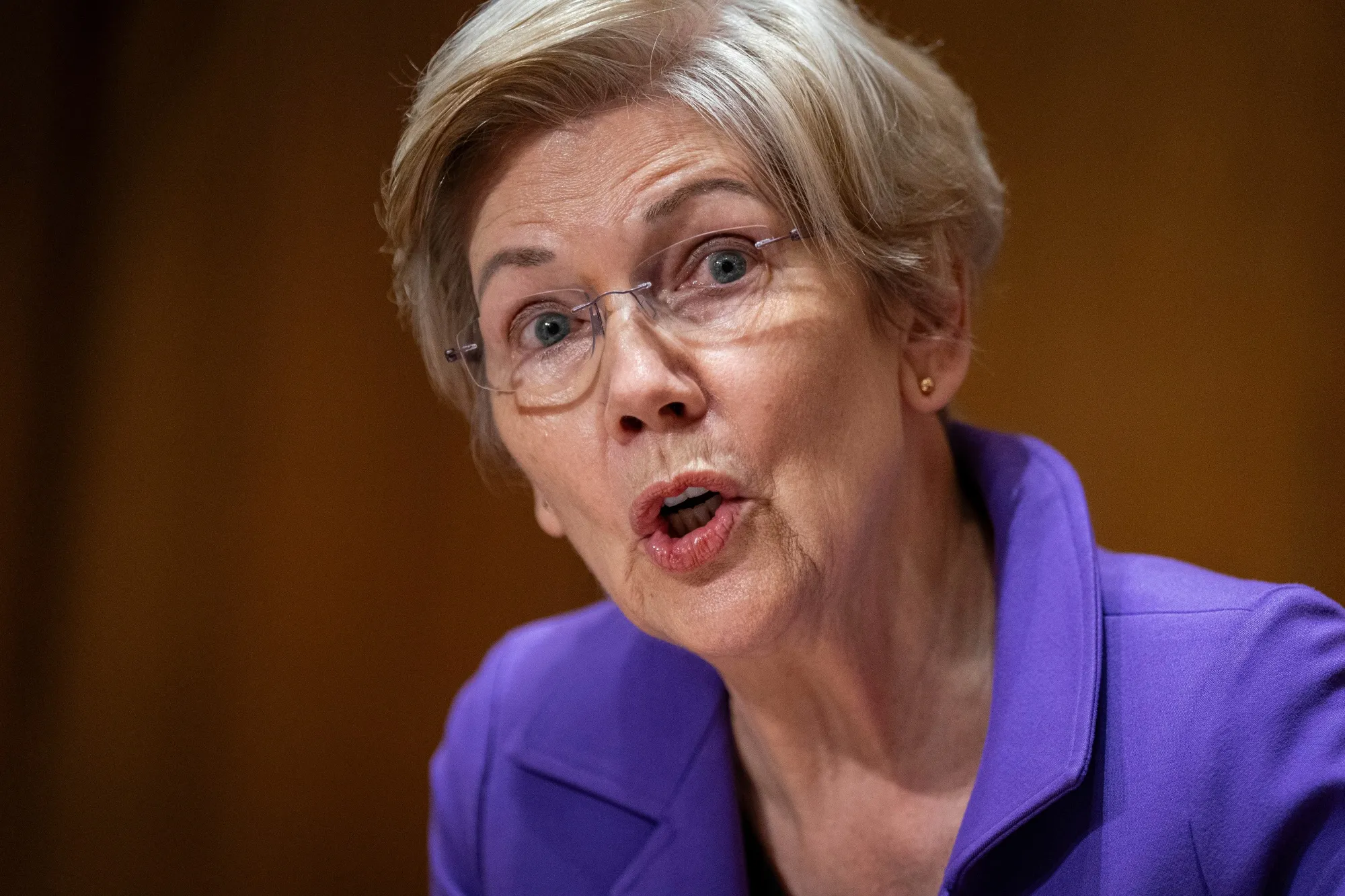
Senator Elizabeth Warren is publicly challenging the Trump administration over its refusal to disclose the terms of 'secret pricing deals' with major pharmaceutical companies. Despite a commitment from Health and Human Services Secretary Robert F. Kennedy Jr. to provide transparency, the requested documents remain withheld from the public.

US Government Transfers Bitcoin Seized from Alameda Research
Federal authorities have moved a small cache of Bitcoin seized three years ago from Alameda Research accounts on Binance.US. While the transaction has reignited industry speculation regarding the government's liquidation strategy for FTX-linked assets, officials have yet to clarify whether the movement signals an impending sale or internal wallet consolidation.
Grocery Costs Emerge as Top Financial Stressor for Americans
Fifty-three percent of Americans now identify grocery bills as a primary source of financial anxiety, outpacing concerns over housing, healthcare, and childcare. This persistent distress arrives as new import tariffs under President Donald Trump threaten to push the price of staples like coffee and chocolate even higher.

SNAP Enrollment Hits 17-Year Low Following GOP Budget Law
Enrollment in the Supplemental Nutrition Assistance Program has plummeted to its lowest level in nearly two decades, with roughly 5 million fewer Americans receiving food aid. The decline follows the implementation of the 2025 Republican budget law, which experts warn is accelerating a broader erosion of nutritional support for vulnerable families.
Global Crypto Tax Reporting Faces Massive Oversight Gap
International tax reporting frameworks are poised to miss nearly 86% of the $457 billion in potentially taxable onchain crypto activity recorded in 2025. According to Chainalysis, the OECD’s Crypto-Asset Reporting Framework captures only a small fraction of decentralized finance, private wallet transfers, and peer-to-peer payments occurring across major blockchains.

Unstoppable Domains Abandons ICANN Bid, Promises User Refunds
Unstoppable Domains has officially withdrawn its bid to integrate its Web3 extensions into the traditional internet’s root system, citing prohibitive costs associated with ICANN’s 2026 application round. The decision forces a pivot for the company, which now plans to compensate customers who purchased domains under the promise of conventional DNS support.

US Designates UK-Based Palestine Action as Terrorist Organization
The Trump administration has officially designated the British anti-genocide group Palestine Action as an international terrorist organization, triggering sweeping sanctions that block the group from the US financial system and impose lifetime travel bans on its co-founders, Richard Barnard and Huda Ammori, for their direct-action protests against Israeli weapons manufacturers.
Dormant Bitcoin Wallets Wake Up, Moving $40 Million in Assets
Six Bitcoin wallets dormant for over a decade have moved 553.59 BTC, valued at approximately $40.15 million, in a series of transactions occurring between August 16 and August 26. While the sudden activity has drawn attention, blockchain data remains inconclusive regarding whether these funds were liquidated or merely relocated.

Hyperliquid seeks CFTC approval for 24/7 energy perpetuals
Hyperliquid Policy Center and trade[XYZ] are urging the Commodity Futures Trading Commission to authorize regulated perpetual contracts for WTI crude, Brent crude, and Henry Hub natural gas. The proposal aims to bridge the gap in weekend hedging for U.S. firms by leveraging continuous on-chain trading infrastructure.

Bernstein Projects Bitcoin to Reach $150,000 by Mid-2027
Wall Street research firm Bernstein expects Bitcoin to hit a record $150,000 by mid-2027, driven by institutional adoption and a potential currency-debasement scenario. Analysts led by Gautam Chhugani maintain that the digital asset will continue to follow its historical four-year cycle, eventually climbing toward $300,000 by 2029.

Proposed Repeal of Roadless Rule Threatens Hundreds of Species
The Trump administration’s push to rescind the Roadless Area Conservation Rule could place 400 species on an extinction fast track, according to a new report by the Center for Biological Diversity. The analysis warns that opening 45 million acres of protected national forest to development risks catastrophic ecological and hydrological damage.

Chainlink brings Coinbase tokenized stocks into DeFi lending
Chainlink has launched price feeds for four Coinbase tokenized stocks on the Base network, enabling decentralized lending protocols to accept Nvidia, Meta, Apple, and Alphabet shares as collateral. This integration allows holders to leverage their assets without selling them, provided they meet strict non-U.S. investor eligibility requirements.
Democratic States Sue to Block Trump’s New USPS Mail-In Ballot Rules
A coalition of two dozen Democratic-led states launched a legal challenge Wednesday against a new federal rule requiring states to surrender voter data to the U.S. Postal Service. The lawsuit aims to halt an administration directive that would withhold ballot delivery from jurisdictions refusing to comply with the data-sharing mandate.
US Workers' Wage Share Hits Record Low Amid Corporate Profit Surge
As President Donald Trump’s economic policies take hold, the divide between corporate windfall and household stability has reached a historic extreme. New data reveals that workers' wages now constitute the smallest share of national income ever recorded, even as corporate profits climb to unprecedented heights on the back of controversial trade maneuvers.

Democrat Lawmaker Demands Postmaster General’s Removal Over Ballot Policy
Rep. Raja Krishnamoorthi has formally requested the removal of Postmaster General David Steiner, accusing him of transforming the U.S. Postal Service into a partisan tool for voter suppression. The Illinois Democrat asserts that Steiner’s refusal to confirm compliance with court-ordered ballot delivery mandates has rendered him unfit for office.

Jury Finds Meta and Google Negligent in Landmark Youth Addiction Trial
A Los Angeles jury has held Meta and Google liable for the addictive design of their platforms, ordering the tech giants to pay $3 million in damages to a young woman who suffered from severe mental health issues after using Instagram and YouTube since early childhood.

Meta to Pay $17 Billion in Landmark Child Safety Settlement
A bipartisan coalition of 51 state and territorial attorneys general has secured a proposed $17.1 billion agreement with Meta, aimed at curbing addictive social media practices. The deal mandates sweeping policy changes to protect minors, marking a significant escalation in the legal battle against Silicon Valley's influence on youth.

Taurus Integrates Swift Blockchain for Tokenized Bank Payments
Swiss digital asset infrastructure provider Taurus has opened a direct gateway to Swift’s blockchain-based shared ledger, allowing financial institutions to manage tokenized deposits and cross-border payments. This integration enables banks to leverage existing custody and tokenization systems for 24/7 fund movements without disrupting current settlement arrangements.

Lighthouse Canton Targets 2027 Growth Through Multi-Jurisdictional Focus
With over $6 billion in assets under management, Singapore-based Lighthouse Canton is accelerating its global expansion. Prashant Tandon, the firm’s UAE chief executive, frames the current growth trajectory as a deliberate, long-term strategy to provide integrated financial services to cross-border clients navigating increasingly complex regulatory and structural landscapes.

HSBC Private Bank Shuffles Leadership to Capture Asian Wealth Flows
HSBC Private Bank has initiated a strategic reshuffle of its senior leadership team, targeting the lucrative Global India, Singapore, and offshore China markets. The appointments aim to consolidate the bank's influence across key wealth hubs as international lenders compete for a larger share of the region’s ultra-high-net-worth families.

Most Americans Reject Crypto in Retirement Plans Amid Financial Anxiety
A majority of Americans oppose the inclusion of cryptocurrency in workplace retirement accounts, with 53% of savers signaling resistance to digital assets in 401(k) menus. This skepticism arrives as 77% of the public labels crypto investments as inherently risky, reflecting broader anxieties about long-term financial stability and mounting household debt.

Darline Graham’s Healthcare Critique Sparks Backlash
South Carolina Senator Darline Graham sparked intense scrutiny Tuesday after attacking her Democratic opponent, Dr. Annie Andrews, for supporting government-run healthcare. In the same breath, Graham recounted her parents' early deaths, framing their inability to take sick leave as a testament to hard work rather than a systemic failure.
College students demand crypto education as formal courses lag
While 90% of college students advocate for blockchain and cryptocurrency integration into their financial curriculum, only 28% of U.S. business schools currently offer related coursework. This widening gap leaves the majority of young investors to navigate digital assets through social media influencers rather than academic instruction.

US Military Escalates Lethal Boat Bombing Campaign in Caribbean
The US military carried out its second lethal strike against a suspected drug-trafficking vessel in as many days, bringing the total death toll from the ongoing campaign to at least 227 people. US Southern Command confirmed Monday's Caribbean operation killed four, following a Sunday strike in the Pacific that killed two.

Why Regulatory Compliance Will Define the Next Stablecoin Giants
Institutional adoption of stablecoins hinges on more than just market cap, as new accounting standards and the GENIUS Act threaten to reshape the competitive landscape. According to Aquanow CEO Phil Sham, issuers who master rigorous redemption rights and transparency will likely capture the bulk of institutional liquidity.
Bitcoin retreats below $78K as leveraged positions unwind
Bitcoin’s rally stalled this week, slipping below $78,000 after a failed breakout above $81,000 triggered a $270 million wave of long liquidations. While the correction erased recent gains, persistent inflows into US spot ETFs indicate that institutional demand remains a critical buffer against further volatility.

Pump.fun expands to HyperEVM as Hyperliquid trading volume surges
Pump.fun has integrated HyperEVM token trading, allowing users to swap assets using USDC on the Hyperliquid blockchain. The expansion marks a strategic pivot for the platform, which previously focused exclusively on the Solana ecosystem, as it looks to capture liquidity from a network currently handling over $500 million in daily volume.
SEC Advances Crypto Custody Rules to White House for Review
The U.S. Securities and Exchange Commission has submitted a proposed overhaul of crypto custody rules to the White House Office of Management and Budget. This submission marks a shift toward modernizing how investment advisers and companies handle digital assets, replacing previous regulatory attempts that stalled under the former administration.

A Rescue Dog Named Tango Finds a Home at Binance Argentina
In the shadow of a high-tech financial landscape, a black-and-white rescue dog has found his place. For the Buenos Aires team at Binance, the arrival of Tango—a once-abandoned shelter dog—serves as a grounding reminder that the most significant connections often occur far away from the volatility of digital markets.