All news

UN Warns War on Iran Could Push 45 Million Toward Acute Hunger
The United Nations World Food Program warned on Tuesday that the ongoing war on Iran threatens to plunge 45 million additional people into acute food insecurity by mid-2026. As the conflict disrupts a critical global energy hub, rising costs for fuel and fertilizer are creating a cascading crisis for vulnerable populations worldwide.
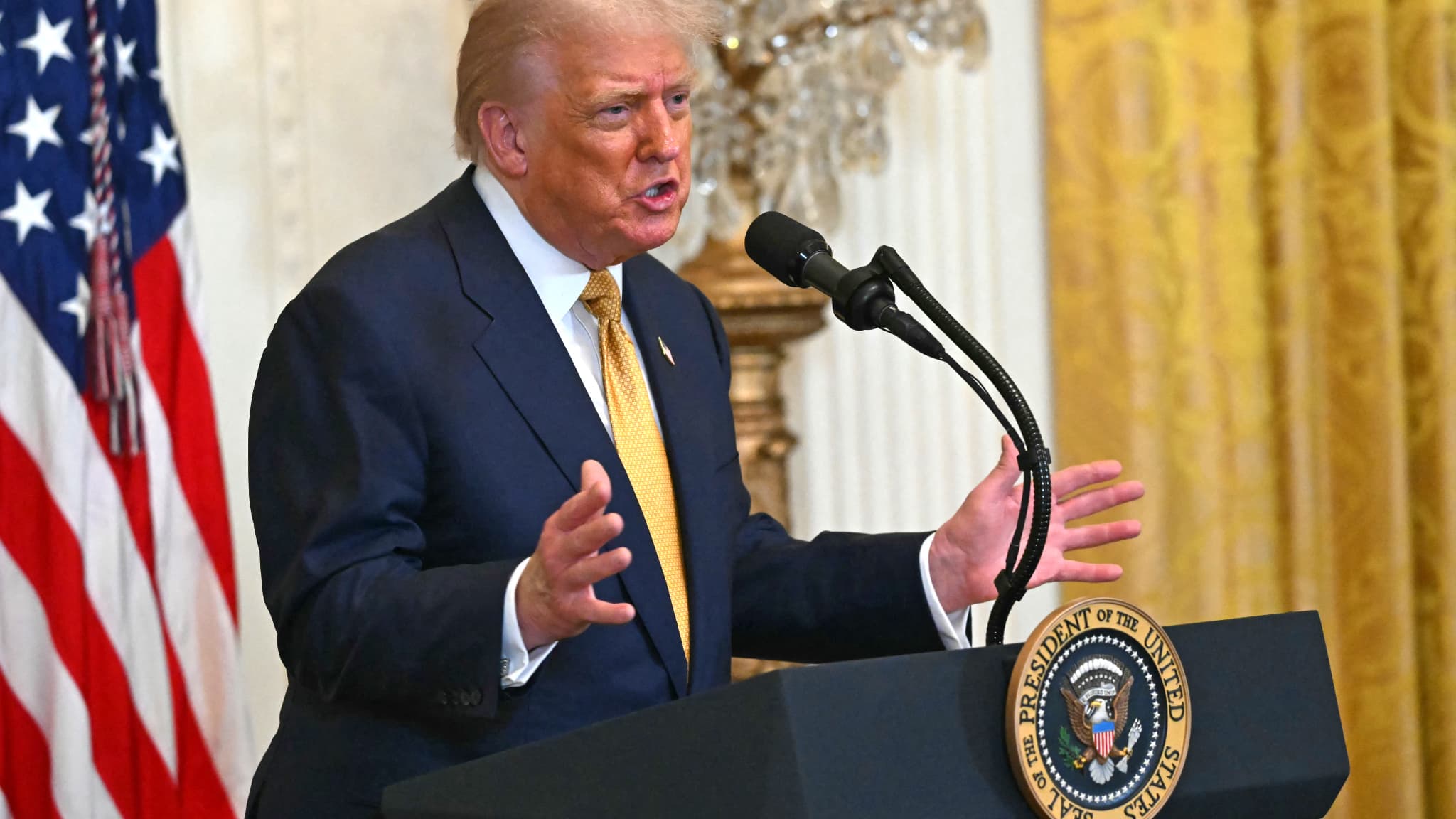
Trump Shares AI-Generated Video of Iran Strike That Never Happened
Donald Trump sparked fresh alarm Monday after posting an artificial intelligence-generated video on Truth Social depicting the destruction of Kharg Island, Iran's primary oil terminal. The footage, which the president captioned as being "blown to smithereens," was quickly dismissed by U.S. officials who confirmed no such strike occurred.
Trump Shares AI-Generated Vision of Post-War Gaza as Luxury Enclave
Donald Trump shared a computer-generated video on his Truth Social platform Tuesday depicting a post-war Gaza transformed into a luxury resort. The 34-second clip, set to an upbeat soundtrack, portrays figures including Elon Musk and Benjamin Netanyahu enjoying a sanitized, affluent landscape where the enclave once stood.

Retired Israeli Generals Condemn Settler Violence in West Bank
A group of retired Israel Defense Forces generals is openly challenging their government, labeling the ongoing campaign of settler violence against Palestinians in the occupied West Bank as ethnic cleansing. The officers are conducting field tours to expose the scale of destruction that US Ambassador Mike Huckabee recently termed terrorism.
Beyond the Rally: The Structural Shift Reshaping Crypto Markets
While market participants fixate on daily price swings, a fundamental transformation is occurring on-chain. Major platforms are moving away from isolated, walled-garden ecosystems, instead prioritizing direct retail ownership and the integration of traditional financial assets into decentralized infrastructure.

Strategy Resumes Bitcoin Accumulation With $370 Million Buy
After a two-month hiatus from the market, Strategy has returned to Bitcoin accumulation, acquiring 4,603 BTC for $369.7 million. The Virginia-based firm executed the purchase between August 24 and August 30, pushing its total holdings to a record 845,050 BTC at an average cost of $80,318 per unit.

Catapult Trade raises $6.6 million ahead of PULT token launch
With $6.6 million in capital secured across four funding rounds, Catapult Trade has finally pulled back the curtain on its backers. The platform, which merges gamified trading with provably fair algorithmic mechanics, is now preparing for a token generation event scheduled for the fall of 2026.

Bitcoin BIP-110 supporters target September 1 for BLAKE2b fork
After a failed attempt to enforce BIP-110 rules on the main Bitcoin network, a group of developers is pivoting toward a separate proof-of-work chain. Scheduled for a September 1 launch, this breakaway network replaces Bitcoin’s standard SHA-256 algorithm with BLAKE2b, effectively detaching the project from established mining infrastructure.

FBI and Australian Police Charge Two in Global Software Supply-Chain Probe
Two Western Australian men face 14 charges following a multi-agency investigation into the TeamPCP syndicate, an alleged cybercrime ring accused of compromising over 1,000 organizations. Authorities claim the group embedded malicious code into open-source software, harvesting 500,000 credentials and siphoning 300 gigabytes of sensitive data from downstream developers.

Float Protocol loses $28,000 in Uniswap V3 flash loan exploit
Float Protocol suffered a $28,000 loss after an attacker leveraged a flash loan to manipulate Uniswap V3 spot prices. By distorting liquidity pool data, the exploiter tricked Hypervisor contracts into calculating inflated share values, allowing for a series of profitable deposit and withdrawal cycles within a single transaction.

Polymarket Fortifies Surveillance Systems Ahead of U.S. Midterms
As U.S. midterm elections approach, Polymarket has overhauled its trade surveillance and intelligence operations to combat insider trading. Under the guidance of former FBI investigator Shana Bautista, the platform is leveraging blockchain analytics and machine learning to flag suspicious activity, following over 100 prior referrals to federal law enforcement.

Ontology Suspends Mainnet Operations Over Security Concerns
Ontology has halted all mainnet block production following the discovery of a potential security vulnerability during a routine internal check. While the network remains offline to facilitate an emergency review by developers and validators, the team maintains that no user assets have been compromised or lost during the incident.

XRP Ledger Amendments Face Validator Hurdle for Native Lending
XRP Ledger validators are currently weighing two protocol amendments, XLS-65 and XLS-66, which would integrate single-asset vaults and institutional lending directly into the network. Despite the proposal’s technical potential, support remains well below the required 80% consensus threshold, leaving the timeline for mainnet activation currently uncertain.
Critics Label Trump’s Venezuela Oil Deal a Calculated Resource Grab
President Donald Trump faces mounting accusations that he is leveraging an energy crisis of his own making to justify a massive oil deal with Venezuela. Critics argue the agreement, signed months after the U.S. military intervention in the country, serves as a strategic maneuver to secure fossil fuel assets.

South Korea Arms Tax Agency with Crypto Tracing Tools for 2027 Levy
South Korea’s National Tax Service is deploying commercial blockchain tracing software to monitor private wallet activity, aiming to close enforcement gaps ahead of a 2027 crypto tax launch. The initiative seeks to capture taxable income that currently evades oversight by bypassing centralized domestic exchanges.

Berlin Government Rejects Ransom After Cyberattack Hits State Agencies
Berlin Mayor Kai Wegner has vowed the city will not bow to extortion after a cyberattack hit two state departments, prompting hackers to demand a 30 Bitcoin ransom for allegedly stolen data. While the city investigates the breach, officials have refused to meet the attackers' financial demands.
Zakura Toolkit Slashes Zcash Transaction Latency
A new open-source cryptography toolkit from Zakura promises to accelerate Zcash private transaction construction, potentially reducing processing times from over three seconds to under 200 milliseconds. The update, released August 29, aims to optimize performance on mobile and desktop devices without requiring a coordinated network upgrade.

Ripple Treasury Logs Simultaneous Mint and Burn of 11M RLUSD
Ripple’s RLUSD stablecoin treasury executed a simultaneous mint and burn of 11 million tokens on August 31, leaving the net supply unchanged despite recent growth. While total market capitalization has surged past $2.37 billion, these offsetting transactions highlight the gap between treasury issuance and actual public circulation.

Tether CEO Challenges BIS Over Tokenized Deposit Risks
Tether CEO Paolo Ardoino has ignited a debate over the future of digital money, challenging the Bank for International Settlements' (BIS) preference for tokenized bank deposits. Ardoino argues that fully reserved stablecoins provide a safer, more transparent alternative to the fractional reserve model underpinning traditional commercial banking.

More Markets Protocol Drained of $9.3 Million on Flow EVM
The decentralized lending protocol More Markets suffered a significant exploit on the Flow EVM network, resulting in the loss of 15.5 million WFLOW tokens. Blockchain security firm Blockaid estimated the impact at approximately $9.3 million, tracing the breach to an interaction between Ankr’s liquid staking assets and the protocol’s E Mode mechanism.

Cosmos EVM flaw triggers $5.72 million in cross-chain thefts
A critical integer underflow vulnerability in the Cosmos EVM framework allowed attackers to drain assets from six blockchain networks between Aug. 20 and Aug. 25. The flaw, which went unpatched for months after initial discovery, enabled the theft of approximately $5.72 million in tokens before security measures took hold.

Revolut Launches Euro Stablecoin as ECB Refines Digital Currency Privacy
Revolut has initiated the rollout of its euro-backed stablecoin, EURR, to selected customers in Denmark, Poland, and Portugal. This move coincides with fresh commitments from the European Central Bank to prioritize user anonymity within its own digital euro project, which remains under development for a potential 2029 launch.

Crypto Buybacks Hit $638 Million Record Amid Uneven Market Adoption
Crypto projects funneled $638 million into native token repurchases during the first eight months of 2026, marking a 17% increase over the previous year. While the strategy grows in popularity, the data reveals a stark divide: nearly 90% of all buyback activity is concentrated within just two platforms.

Polygon Patches Critical Network Vulnerabilities via Hard Forks
Polygon Labs has successfully mitigated several high-severity security vulnerabilities across its proof-of-stake network. By deploying the Austin and Kyoto hard forks, developers addressed critical flaws in block processing and validator coordination that could have enabled denial-of-service attacks or forced costly resource consumption on the node fleet.

Ex-White House aide fined $172K for betting on presidential speeches
Gabriel Perez, a former teleprompter operator for the White House, has agreed to a $172,539 settlement with the Commodity Futures Trading Commission. Regulators found that Perez leveraged his advance access to Donald Trump’s speeches to profit from event contracts that tracked specific phrases used during presidential addresses.

Robinhood Chain Surges to Brief Revenue Lead Over Ethereum
A snapshot from a rolling DeFiLlama dashboard on August 31 placed Robinhood Chain at the top of the daily application revenue rankings, with $2.66 million recorded over 24 hours. This figure momentarily eclipsed established networks like Ethereum, Hyperliquid, and Base, driven by a surge in specific protocol activity.

Kalshi Seals Exclusive US Open Prediction Partnership
The U.S. Tennis Association has named Kalshi its exclusive prediction market partner, securing a high-profile presence at the tournament just as the main draw begins in New York. The deal effectively locks out rival platforms from advertising across the venue and official tournament broadcasts, including ESPN coverage.

HyperLabs triggers $36M HYPE unstaking ahead of September deadline
A wallet linked to HyperLabs, the core development team behind Hyperliquid, has initiated an unstaking request for 433,000 HYPE tokens. Valued at roughly $36.14 million at the time of the filing, the assets are currently held in a mandatory seven-day exit queue, with the release expected to conclude on September 6.

Ripple’s Alderoty Links CLARITY Act to U.S. Job Growth
As the Senate prepares for a pivotal September 15 cloture vote on the Digital Asset Market Clarity Act, Ripple Chief Legal Officer Stuart Alderoty is framing the legislation as a vital engine for national employment, citing industry-funded research to bolster the push for federal regulatory framework.

Fireblocks-Linked Wallet Moves $30 Million in USD1 to Binance
A Solana-based wallet tagged as Fireblocks Custody transferred $30 million worth of USD1 tokens to Binance over a 15-hour window, according to data from Onchain Lens. This latest movement follows a series of deposits totaling nearly $100 million from the same address, fueling speculation regarding the stablecoin's liquidity movements.