All news
Federal Judge Rebukes Trump Administration Over Deportation Tactics
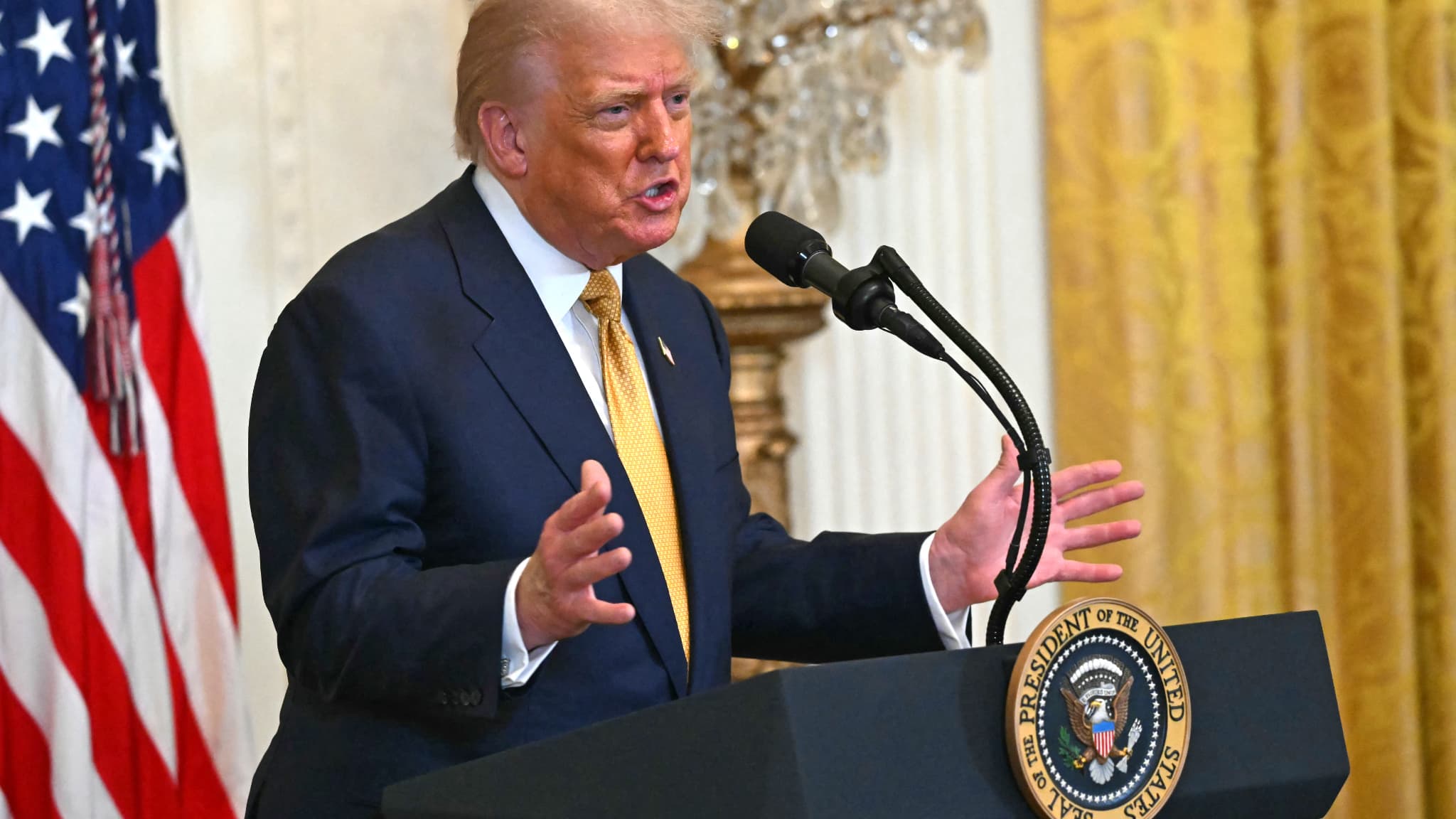
U.S. District Judge William Young issued a landmark ruling Tuesday, declaring the Trump administration’s targeting of pro-Palestinian student activists for deportation an unconstitutional effort to chill protected speech. The Reagan-appointed jurist characterized the government’s actions as an authoritarian attempt to silence dissent through intimidation.
Trump Files Libel Suit Against Wall Street Journal Over Epstein Report
President Donald Trump initiated a federal lawsuit in Miami on Friday against The Wall Street Journal, its parent company News Corp, and Rupert Murdoch, following the newspaper's report that he contributed a bawdy, hand-illustrated letter to a birthday album prepared for convicted sex offender Jeffrey Epstein.
Coalition of 150 Groups Backs Think Tank Against Trump Legal Threats
A broad coalition of 150 civil society organizations is pushing back against the Trump administration's attempt to silence dissent through legal intimidation. The groups have rallied behind the Center for American Progress, which faced a lawsuit threat after publishing research that challenged the effectiveness of the president's National Guard deployment in Washington, D.C.
Trump Administration Seizes Control of White House Press Pool
The Trump administration announced Tuesday that it will now dictate which news outlets participate in the presidential press pool, effectively ending the White House Correspondents' Association’s long-standing role in managing press access. This shift follows a federal judge's refusal to lift a ban on Associated Press reporters.
New Report Chronicles Escalating Assault on First Amendment Rights
A comprehensive report released Monday by the advocacy group Free Press details a systematic campaign by the Trump administration to suppress dissent and erode free expression. Analyzing over 500 incidents, the study characterizes the administration’s tactics as uniquely aggressive, pervasive, and a direct threat to constitutional protections.

Jewish Artists Defend Mark Ruffalo Against Paramount Smear Claims
A coalition of over 170 Jewish figures, including Joel Coen and Tony Kushner, has rallied behind actor Mark Ruffalo after Paramount executives accused him of antisemitism. The group argues that the studio is weaponizing such charges to deflect scrutiny from its corporate interests and ties to the Israeli government.
Predict.fun Launches Developer Dashboard to Automate API Access
Predict.fun has moved away from manual support requests, launching a self-service portal that allows developers to generate API keys, monitor usage, and manage rate-limit tiers directly. The update streamlines integration for the BNB Chain-based prediction market, which has processed over $1.8 billion in volume since late 2025.

OKX Expands European Margin Trading with 10 New USDC Pairs
OKX is broadening its European market reach by adding 10 new spot margin pairs quoted in USDC, offering traders up to 10x leverage. The expansion arrives as tokens like NEAR and ENA experience notable volatility, climbing 7.2% and 5.6% respectively over the past 24 hours.

Wendell Berry, Poet and Defender of the American Land, Dies at 92
Wendell Berry, the prolific writer and activist whose advocacy for small-scale farming and environmental stewardship challenged the rise of industrial agribusiness, died Monday at his home in Port Royal, Kentucky. He was 92, leaving behind a legacy that bridged the gap between agrarian philosophy and direct political action.

RedStone brings instant exits to NYLIM tokenized bond fund
RedStone is introducing same-block exits for holders of Centrifuge’s tokenized NYLIM U.S. High Yield Corporate Bond fund, bypassing the standard three-day redemption wait. Through a 300-millisecond offchain auction, the service allows liquidity providers to purchase fund units immediately in exchange for a discount.
The Hidden $1,200 Tax: How the Iran War Hits American Wallets
Six months into the war with Iran, the average American household has effectively paid a $1,200 surcharge. This figure, calculated by Moody’s Analytics chief economist Mark Zandi, accounts for more than just direct military spending, revealing how the conflict’s ripple effects have eroded domestic purchasing power and consumer stability.

Ethena Pay launches mobile beta with up to 6% rewards
Ethena has opened its Ethena Pay beta to an initial group of 400 users, debuting a self-custodial mobile app that integrates USDe balances with a Visa payment card and Avalanche-based settlement, offering annual rewards of up to 6% across 49 countries.
Whistleblower Warns USPS IT Overhaul Could Stall Midterm Ballots
A federal whistleblower has alerted Congress that the U.S. Postal Service is rushing to implement a flawed IT system that could derail the midterm elections. The disclosure, released Tuesday by Senator Richard Blumenthal, describes a chaotic development process that threatens to block millions of ballots from reaching voters this November.
Bari Weiss Face Scrutiny Over Controversial CBS News Report
CBS News editor-in-chief Bari Weiss allegedly directed a contentious story linking Democratic Senate candidate Abdul El-Sayed to the September 11 terrorist attacks. Internal sources claim Weiss personally intervened to sharpen the piece’s focus on deleted social media posts, overriding concerns raised by network staffers regarding the report's editorial integrity.

Scott Pelley Accuses Bari Weiss of Demanding Pro-Trump Bias at CBS
Veteran correspondent Scott Pelley has detailed an alleged campaign by CBS News editor-in-chief Bari Weiss to steer the network's flagship program, 60 Minutes, toward a pro-White House narrative. Pelley claims Weiss repeatedly pressured producers to inject falsehoods into reports, specifically regarding the fatal shooting of civilians by federal agents.

Cardano and Blockforce Scale Supply Chain Verification to 500,000 Records
A new partnership between the Cardano Foundation and Brazilian tech firm Blockforce has pushed half a million supply chain records onto the public blockchain. By utilizing a hybrid ledger system, the collaboration aims to provide verifiable proof of authenticity for industrial goods while keeping sensitive commercial data strictly private.

New York Mandates Fossil Fuel Companies Pay for Climate Damages
Democratic Gov. Kathy Hochul has signed the Climate Change Superfund Act, making New York the second state to force major fossil fuel corporations to pay for the environmental wreckage they cause. The law seeks to shift the mounting financial burden of climate adaptation from taxpayers to those responsible for historical emissions.

Campaigners Urge Appeal After Federal Judge Blocks New York Climate Law
Climate advocates are pressuring New York Attorney General Letitia James to challenge a federal ruling that struck down the state’s Climate Change Superfund Act. The decision, which branded the law unenforceable, halts a landmark initiative aimed at forcing major fossil fuel companies to pay for climate-related infrastructure damages.

Strategy’s STRC buybacks cross $635 million as stock lingers below par
Despite pouring $635.2 million into repurchasing its STRC perpetual preferred stock, Strategy has yet to see the security trade consistently at its $100 par value. The company’s latest weekly buyback effort reached $151.8 million, even as it pivoted back toward aggressive Bitcoin accumulation following a two-month acquisition pause.

Top 5 embedded verification SDKs for DeFi in 2026
As decentralized finance expands into lending, payments, and tokenized real-world assets, developers are moving beyond traditional onboarding. They are now integrating embedded verification SDKs directly into their platforms to handle identity and compliance requirements without forcing users through disconnected, repetitive experiences.

Beyond HODLing: Navigating the Evolving Bitcoin Yield Landscape
Bitcoin holders are moving past simple lending, exploring a 2026 landscape where yield strategies range from self-custodial staking to complex managed DeFi vaults. As options proliferate, investors must now weigh the trade-offs between native BTC returns, smart-contract exposure, and the underlying durability of the economic incentives provided.

Pentagon weighs periodic strikes on Iran to secure oil shipping lanes
The U.S. Defense Department is weighing a strategy of intermittent, targeted bombing campaigns against Iran to ensure oil tankers navigate the Strait of Hormuz. Critics argue this shift signals a move toward a permanent state of war, directly contradicting earlier promises made by the Trump administration to avoid such prolonged military involvement.

MicroStrategy fights MSCI plan to exclude crypto treasury firms
MicroStrategy has formally challenged MSCI’s proposed screening rules for non-operating assets, arguing the methodology unfairly targets digital asset treasury firms. Executives Michael Saylor and Phong Le labeled the proposal discriminatory, warning that potential index exclusion would damage MSCI’s reputation as a neutral provider while offering no meaningful benefit to investors.
Binance Adds Physically Settled U.S. Stock and ETF Options
Binance has expanded its platform to include physically settled options for U.S.-listed stocks and exchange-traded funds, allowing users to trade calls and puts linked to traditional equities. The move marks a shift away from cash-settled derivatives, as exercised contracts now result in the delivery of actual shares.

London Stock Exchange to tokenize major UK equities via Kraken parent
The London Stock Exchange has entered a partnership with Payward, the parent company of Kraken, to launch tokenized versions of the 100 largest UK-listed companies. The initiative leverages Payward’s xStocks framework, aiming to bridge traditional equity markets with blockchain infrastructure while preparing for potential 24-hour trading.

Ripple and SettleMint Partner to Target Asia-Pacific Tokenization
Regulated financial institutions in the Asia-Pacific region now have access to a unified platform for digital asset custody and lifecycle management. Ripple and SettleMint announced a strategic integration on Sept. 1, combining Ripple’s institutional-grade custody infrastructure with SettleMint’s Digital Asset Lifecycle Platform to streamline the issuance and governance of tokenized assets.

Cronos Restarts After Emergency Halt Following Tectonic Protocol Exploit
Cronos has resumed block production after an emergency validator-led shutdown designed to contain a massive security breach on the Tectonic lending protocol. By rolling back the network to a state preceding the attack, validators wiped out transactions linked to the exploit, which researchers estimate drained nearly $75 million in assets.
Ripple Overtakes Kraken as Top Holding in C1 Fund Portfolio
Ripple Labs has claimed the top spot in the C1 Fund’s private equity portfolio as of June 30, 2026, marking a strategic shift for the NYSE-listed vehicle. The blockchain firm now accounts for 17.5% of the fund’s net assets, narrowly edging out Kraken’s parent company, Payward, which holds a 16.9% allocation.

Ripple Releases 1 Billion XRP as Escrow Balance Hits 31.28 Billion
Ripple initiated its scheduled monthly release of 1 billion XRP on September 1, utilizing three separate transactions of 500 million, 400 million, and 100 million tokens. The movement of these assets, tracked by Whale Alert, leaves approximately 31.28 billion XRP remaining within the company’s time-locked escrow contracts.

Russia Launches Regulated Cryptocurrency Trading Framework
Russia’s comprehensive legal framework for digital assets took effect Sept. 1, establishing a supervised environment for crypto trading, custody, and cross-border settlements. The legislation brings exchanges and depositories under Bank of Russia oversight while restricting the use of digital currencies for domestic retail payments.