Cryptocurrency

Bitcoin Eyes $87,500 Resistance After Weak Payroll Report
U.S. nonfarm payrolls grew by a meager 29,000 in September, significantly undershooting economist forecasts of 90,000. This cooling labor market has recalibrated expectations for Federal Reserve policy, fueling investor optimism that interest rate hikes may pause in October and providing fresh momentum for Bitcoin’s latest recovery.

Circle Challenges EU Stablecoin Reserve Rules Following SVB Collapse
Circle is lobbying the European Commission to dismantle mandatory bank deposit thresholds for stablecoin reserves, arguing that forcing issuers to park capital in commercial banks creates systemic credit risks rather than stability, a lesson learned during the $3.3 billion exposure to the failed Silicon Valley Bank.

Forward Industries Expands Solana Treasury Amid Strategic Growth
Forward Industries added nearly 949,000 SOL to its treasury during the fiscal fourth quarter, bringing total holdings to 8.5 million tokens. The accumulation, bolstered by a $25 million stock offering, pushed the company’s SOL-per-share metric up 10.4% as management aggressively pursues a long-term Solana-centric investment strategy.

THORChain Activates Zcash Liquidity Pool Amid Security Scrutiny
THORChain launched its Zcash liquidity pool on October 2, marking a significant step toward enabling native ZEC trading. Following a network-wide node churn, every node is now monitoring the Zcash chain, though the protocol has advised users to exercise caution due to currently shallow liquidity levels.

SMBC Nikko targets 2027 for Japan-focused DeFi gateway
SMBC Nikko Securities is formalizing a path into decentralized finance, signing a memorandum of understanding with Uniswap Labs, Nethermind, Base, and the Nyx Foundation to build a regulated gateway for Japanese investors. The consortium aims to complete the infrastructure by mid-2027, integrating compliance controls directly into liquidity pools.

Bybit Targets Turkish Market with Super App Ambitions
Bybit is mapping out a transition from a dedicated crypto exchange to a comprehensive financial super app in Türkiye. CEO Ben Zhou views the nation as a top-five global market, aiming to integrate traditional investment products, international transfers, and stablecoin payment services into the platform’s existing local infrastructure.

Robinhood’s tokenized stock volume testing SEC exemption limits
Robinhood’s trading volume for tokenized stocks is already approaching the strict caps set by the SEC’s new five-year innovation exemption. Despite the company’s push to bring traditional equities on-chain, senior crypto lead Johann Kerbrat confirmed the platform is currently navigating the regulatory parameters to avoid mandatory trading halts.
Inside the €39.5M AI Heist at Fideuram
An elaborate digital impersonation scheme has drained €39.5 million from Fideuram, Italy’s premier private banking arm. Fraudsters utilized AI-cloned voices and forged executive documents to manipulate high-level staff into authorizing nearly €95 million in illicit international transfers, leaving investigators chasing a digital paper trail into the world of cryptocurrency.
South Korea’s Bithumb and Upbit Expand AI Token Offerings
South Korea’s two dominant cryptocurrency exchanges, Bithumb and Upbit, significantly expanded local access to AI-linked assets on October 2. Bithumb introduced Talus (US) to its won-denominated market, while Upbit launched Dolphin (POD) across its won, Bitcoin, and Tether trading pairs, deepening the region's exposure to decentralized AI infrastructure projects.

New York Court Dismisses LIBRA Class Action Lawsuit
A federal judge in New York has dismissed a class action lawsuit against Meteora and its former CEO Benjamin Chow, effectively ending a high-stakes legal battle over the LIBRA and M3M3 memecoin launches. The court ruled that plaintiffs failed to substantiate claims of fraud, racketeering, and corporate liability.
Bitget Hack: $387 Million Vanishes into Bitcoin Mixers
Five days after a $387.5 million breach hit Bitget, investigators report that only $840,000 has been successfully frozen. The attackers bypassed internal security via compromised third-party software, rapidly converting stolen assets across multiple blockchains before funneling the bulk of the funds into Bitcoin through decentralized cross-chain protocols.

South Korean Crypto Exchanges Face Profit Collapse as Trading Dries Up
Operating profits for South Korean cryptocurrency exchanges plummeted 78% during the first half of 2026, falling to KRW81.6 billion. The downturn, documented by the Korea Financial Intelligence Unit, reflects a broader contraction in market participation as daily trading volumes and domestic crypto holdings retreated sharply across the board.

Fed rate pause signals potential relief for Bitcoin
Federal Reserve Vice Chair Philip Jefferson has signaled that policymakers may delay further interest rate hikes, tempering market expectations for an October increase. As traders recalibrate their outlook, the potential cooling of U.S. Treasury yields offers a glimmer of hope for Bitcoin, which has struggled under the weight of tightening financial conditions.

Bitcoin Whales Move $30.5 Billion to Binance
Large investors have funneled $30.5 billion in stablecoins onto Binance over the last 30 days, a 40% jump that signals a rapid increase in deployable liquidity. While the influx suggests whales are positioning for market moves, the capital remains uncommitted as Bitcoin hovers near $84,700.
Upbit integrates AI tools to decode crypto market volatility
South Korean exchange operator Dunamu is deploying new artificial intelligence tools within its Upbit Data Lab to help traders interpret the drivers behind digital asset price shifts. The update includes automated video summaries and interactive chart markers that map specific market news directly to historical price fluctuations.

SBI Tests Stablecoin QR Payments for Tourists in South Korea
Japanese travelers may soon bypass traditional currency exchange when visiting South Korea, as SBI DigiTrust teams up with local partners NICE Information & Telecommunication and DSRV to pilot a stablecoin-based QR payment system. The project, currently in its verification phase, aims to map out the technical and regulatory requirements for cross-border settlement.

Core Lightning Urges Immediate Update Amid Active Exploitation Reports
Operators of Core Lightning nodes running version 26.06.7 or earlier have been issued an urgent security warning after reports surfaced of attackers actively targeting unpatched systems. While the developers have not confirmed whether these attempts have resulted in theft, they are mandating an immediate transition to the latest software release.

South Korea Sets February 2027 Launch for Tokenized Securities
South Korea has unveiled a comprehensive regulatory framework to integrate tokenized stocks, bonds, and investment funds into its capital markets starting February 4, 2027. The Financial Services Commission proposal introduces specific requirements for distributed ledger operations, issuer capital, and a retail trading cap on over-the-counter exchanges.

Fiserv Launches Digital Asset Platform With Solana-Based Stablecoin
Fiserv has officially activated its digital asset infrastructure, tapping the Solana blockchain to power the Bank of North Dakota’s new "Roughrider Coin." The dollar-backed asset, issued by VersaBank USA, is now available to more than 90 banks and credit unions across the state for secure, institutional-grade interbank settlements.

Exploit in Third-Party Aave Adapter Drains $305,000 from Safe Wallets
An authentication flaw in the FlashLoopAdapter, a tool designed to manage Aave v3 leveraged positions, allowed an attacker to drain approximately $305,000 from two Ethereum-based Safe wallets. The breach exploited a vulnerability in how the module verified the legitimacy of incoming transaction requests.

U.S. Targets A7 Network in Multi-Billion Dollar Shadow Banking Crackdown
The U.S. Treasury has designated the Russia-linked A7 Network as a significant transnational criminal organization, alleging the shadow banking system funneled $17 billion through illicit channels to bypass sanctions. The action combines immediate asset freezes with a proposed ban on U.S. financial institutions processing any transactions involving the network’s overseas entities.

IMF Releases $138 Million to El Salvador Following Bitcoin Policy Waiver
The International Monetary Fund has unlocked a $138 million disbursement for El Salvador, formally waiving a breach of its lending conditions related to Bitcoin accumulation. The decision, finalized by the Executive Board on October 1, follows government assurances that recent crypto acquisitions were fueled by private donations rather than public funds.

OKX Adds QNT Perpetual Futures Following 178% Surge
A 178% weekly rally in Quant (QNT) has prompted OKX to launch USDT-margined perpetual futures with leverage up to 50x. The token, which recently saw its price swing from below $100 to over $300, is now settling near $249 as traders weigh high-leverage positions against increased market volatility.
African firms adopt stablecoins to bypass traditional payment bottlenecks
Dickson Nsofor, CEO of the pan-African payment platform Kora, says businesses are increasingly turning to stablecoins to solve chronic cross-border payment delays. By replacing sluggish correspondent banking with digital assets, companies are finding a more reliable way to settle supplier invoices and manage liquidity across fragmented regional markets.
Fed officials signal pause as October rate hike bets plummet
Traders have slashed the probability of an October interest rate hike to 23%, down from 70% just a week ago, as Federal Reserve Vice Chair Philip Jefferson signaled a need for patience. With bond yields rising and economic data shifting, policymakers are increasingly leaning toward a wait-and-see approach for the upcoming meeting.
Circle Challenges EU Stablecoin Rules Over Compliance Gap
Only three of the world’s 30 largest stablecoins currently meet the European Union’s Markets in Crypto-Assets (MiCA) framework, prompting Circle to urge policymakers for a significant overhaul of issuance and reserve requirements to prevent users from migrating to unregulated offshore alternatives.
Drift Foundation opens DFX claims with initial 1% recovery payout
Victims of the April 1 Drift protocol exploit can now claim DFX tokens, though initial redemptions offer only 0.0104 USDT per token. This payout represents roughly 1% of verified losses, as the foundation begins distributing funds gathered from protocol revenue, partner capital, and Tether support to those affected by the breach.
Senate-reported CLARITY Act outlines broad crypto powers for U.S. banks
A Congressional Research Service report reveals that the stalled CLARITY Act would grant U.S. banking organizations and credit unions authority to engage in 11 distinct categories of crypto activity, including digital asset underwriting and dealing, potentially surpassing the limits currently imposed on traditional securities market operations.
TRUMP memecoin organizers offer gala seats amid 97% price collapse
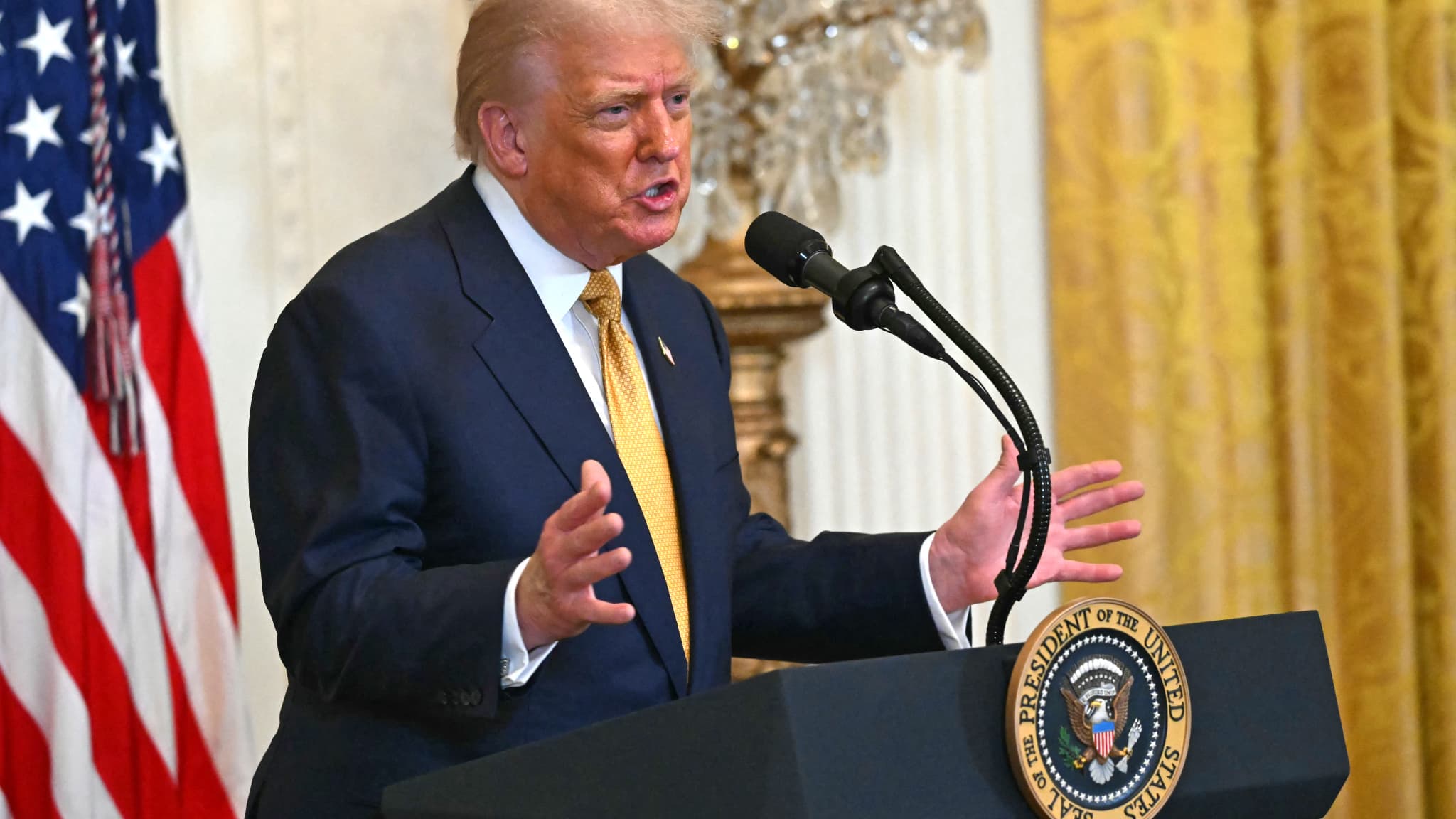
Organizers behind the TRUMP memecoin have launched a contest granting 185 top holders entry to a November 22 gala at Trump National in Washington, D.C. The promotion arrives as the token trades near $2.04, a staggering 97% decline from its peak, while federal lawmakers continue to scrutinize the project's financial ties.

NEAR Intents Restores Service After $3.8 Million BSC Exploit
A $3.8 million exploit targeting USDT on the BNB Smart Chain forced a temporary shutdown of NEAR Intents, prompting co-founder Illia Polosukhin to pledge full restitution for affected users. The platform resumed operations after its AI-driven security system, SHIELD, identified and helped isolate the breach within an hour.