Cryptocurrency

Fed officials signal pause as October rate hike bets plummet
Traders have slashed the probability of an October interest rate hike to 23%, down from 70% just a week ago, as Federal Reserve Vice Chair Philip Jefferson signaled a need for patience. With bond yields rising and economic data shifting, policymakers are increasingly leaning toward a wait-and-see approach for the upcoming meeting.

Circle Challenges EU Stablecoin Rules Over Compliance Gap
Only three of the world’s 30 largest stablecoins currently meet the European Union’s Markets in Crypto-Assets (MiCA) framework, prompting Circle to urge policymakers for a significant overhaul of issuance and reserve requirements to prevent users from migrating to unregulated offshore alternatives.
Drift Foundation opens DFX claims with initial 1% recovery payout
Victims of the April 1 Drift protocol exploit can now claim DFX tokens, though initial redemptions offer only 0.0104 USDT per token. This payout represents roughly 1% of verified losses, as the foundation begins distributing funds gathered from protocol revenue, partner capital, and Tether support to those affected by the breach.

Senate-reported CLARITY Act outlines broad crypto powers for U.S. banks
A Congressional Research Service report reveals that the stalled CLARITY Act would grant U.S. banking organizations and credit unions authority to engage in 11 distinct categories of crypto activity, including digital asset underwriting and dealing, potentially surpassing the limits currently imposed on traditional securities market operations.

TRUMP memecoin organizers offer gala seats amid 97% price collapse
Organizers behind the TRUMP memecoin have launched a contest granting 185 top holders entry to a November 22 gala at Trump National in Washington, D.C. The promotion arrives as the token trades near $2.04, a staggering 97% decline from its peak, while federal lawmakers continue to scrutinize the project's financial ties.

NEAR Intents Restores Service After $3.8 Million BSC Exploit
A $3.8 million exploit targeting USDT on the BNB Smart Chain forced a temporary shutdown of NEAR Intents, prompting co-founder Illia Polosukhin to pledge full restitution for affected users. The platform resumed operations after its AI-driven security system, SHIELD, identified and helped isolate the breach within an hour.

Bitcoin Eyes $82,000 Support as October Volatility Looms
Bitcoin has retreated from a post-inflation peak above $85,500 to trade near $83,500, leaving market participants focused on the $82,000 support level. Analysts warn that this threshold is critical for preventing a deeper slide, as institutional demand faces off against profit-taking and looming U.S. economic data releases.
Illinois Pushes Back Crypto Tax Deadline to 2027 Amid Legal Challenges
Illinois officials have agreed to postpone the enforcement of a contentious 0.2% cryptocurrency transaction tax, moving the effective date from January 1 to July 1, 2027. The delay follows mounting pressure from industry groups who argue that the state's aggressive timeline imposes unsustainable compliance burdens on digital asset firms.
Netherlands Weighs Taxing Unrealized Crypto Gains by 2028
Dutch taxpayers holding Bitcoin may face annual levies on paper gains starting in 2028, as the government moves to overhaul its Box 3 investment tax system. Under current legislative proposals, cryptocurrency value fluctuations would be taxed annually regardless of whether an investor has sold their holdings to lock in profit.

Ghana’s Crypto Market Hits $21 Billion as Regulation Tightens
Ghana has emerged as the fifth-largest crypto market in sub-Saharan Africa, with annual transactions reaching an estimated $21 billion. As the sector matures, the Bank of Ghana and the Securities and Exchange Commission are moving to bring stablecoins and trading platforms under a unified, formal oversight framework.
Citigroup Lifts Bitcoin Price Target to $113,000 Amid ETF Recovery
After a mid-year slump that forced repeated downward revisions, Citigroup has raised its 12-month Bitcoin forecast to $113,000 and its Ether target to $3,028, citing a resurgence in exchange-traded fund inflows and a more favorable macroeconomic environment driven by U.S. Treasury bond buybacks.

PERPTools Secures $8 Million to Scale Perpetual Trading Ecosystem
PERPTools has raised $8 million across two funding rounds, bolstered by $240 million in trading volume during its private beta. Backed by NEAR, Animoca Brands, and Orderly Network, the platform aims to integrate decentralized perpetual futures and autonomous AI trading agents directly into the existing DEXTools analytics environment.

Tokenized Assets Surge to $34B as Equity Trading Diverges from Tradition
The market for tokenized real-world assets has crossed the $34 billion threshold, revealing a distinct shift in investor behavior. While cash-equivalent products dominate in total value, tokenized equities have emerged as the primary engine of onchain secondary trading, signaling a departure from the index-heavy trends seen in traditional finance.

Midnight Price Surges 22% Amid Rising Institutional Privacy Demand
The price of the NIGHT token climbed over 22% in a single day, reaching $0.044, as renewed interest in blockchain privacy and enterprise-level use cases fueled its strongest performance in months. The rally, which brings weekly gains to roughly 84%, highlights growing market focus on selective data disclosure.

US Judge Clears Path for Celsius Lawsuit Against Chainalysis
A federal judge in New York has allowed a fiduciary-duty claim against Chainalysis to proceed, ruling that the firm may have knowingly assisted in the dissemination of misleading information regarding Celsius Network’s 2020 assets. While most consumer-protection claims were dismissed, the core allegation concerning a disputed $3.3 billion audit remains active.
Crypto Hacks Surpass $768 Million in Record-Breaking September
September stands as the costliest month for the cryptocurrency sector in 2026, with security incidents draining approximately $768 million from exchanges and protocols. Two massive exploits—targeting Bitget and the Liquid Network—drove the month's total losses to a level nearly 462% higher than the previous month's figures.

BSP restricts inbound bank transfers for Coins.ph operator
Users of the Coins.ph platform have lost the ability to top up their peso wallets via InstaPay and PESONet following a partial suspension order from the Bangko Sentral ng Pilipinas. The directive targets DCPay Philippines, the platform’s electronic-money issuer, effectively blocking incoming bank transfers until further notice.

XRP Stalls at $1.50 as Ripple Unlocks 1 Billion Tokens
Ripple released 1 billion XRP from escrow on October 1, adding fresh supply to a market already struggling to clear the $1.54 resistance level. Despite institutional inflows via U.S. spot ETFs and new infrastructure integration in Brazil, the token remains locked in a tight consolidation range between $1.46 and $1.54.

SBI Holdings Finalizes Bitbank Acquisition
Following a series of share repurchases finalized on Oct. 1, SBI Holdings has officially completed its acquisition of Japanese crypto exchange Bitbank. The transaction, valued at approximately ¥46.7 billion, integrates the platform as a wholly owned subsidiary, marking the conclusion of a multistep consolidation strategy initiated earlier this year.

US Treasury targets TRON addresses linked to ATM jackpotting scheme
The U.S. Treasury Department has sanctioned seven TRON network addresses tied to a sophisticated ATM jackpotting operation orchestrated by the Tren de Aragua criminal group. These addresses, which moved approximately $6.1 million, represent a broader crackdown on illicit financial networks operating across Mexico and Venezuela to exploit U.S. banking infrastructure.

South Korea Sets Rules for Tokenized Stocks and Bonds
South Korea is moving to integrate traditional financial assets into its blockchain infrastructure, proposing a regulatory framework that brings stocks, bonds, and investment funds under its token securities umbrella. The new rules, set to take effect on February 4, 2027, aim to modernize capital markets while enforcing strict investor protections.

India Leads Asia-Pacific in Centralized Crypto Exchange Inflows
Despite a 14.7% contraction in its overall digital asset economy, India has emerged as the top market for centralized crypto exchange inflows in the Central and Southeast Asia and Oceania region. Users moved $88.4 billion through these platforms between July 2025 and June 2026, outpacing both Singapore and Australia.

Yen volatility threatens a repeat of the Bitcoin carry trade rout
The Japanese yen has tumbled past 158 against the dollar, tempting investors to double down on carry trades while simultaneously priming the market for a violent reversal. As Bank of Japan rate hike expectations cool, the potential for sudden currency intervention looms as a catalyst for liquidating risk assets like Bitcoin.
Lloyds and Visa Complete $750,000 Stablecoin Settlement Test
Lloyds Banking Group and Visa have successfully concluded a seven-day pilot that settled $750,000 in cross-border payment obligations using USDC. By bypassing traditional banking hours, the trial demonstrated that financial institutions can complete settlement in under an hour, even during weekends, using interoperable blockchain infrastructure.
Bybit Reserves Shift Toward Bitcoin and Ether as USDT Holdings Dip
Bybit users have pivoted toward core digital assets, with the exchange’s 40th proof-of-reserves report showing a 2.96% increase in Ethereum balances and a slight rise in Bitcoin holdings. This shift coincides with an 11.46% decline in user-held USDT, signaling a notable reallocation of capital across the platform.

EU Regulators Challenge Binance Over Reverse Solicitation Tactics
European authorities are scrutinizing whether Binance is misusing the "reverse solicitation" loophole to maintain services for EU customers. Following a missed deadline for MiCA licensing in July, regulators are now questioning if the exchange actively targets users in the bloc rather than waiting for them to approach independently.
MetaMask Begins Validator Exit Following Infrastructure Breach
MetaMask has initiated a proactive exit of Ethereum validators after discovering a security incident within its infrastructure on September 30. While the company maintains that no immediate threat exists to user wallets, the decision triggers a wider operational ripple effect across the Lido staking protocol.

Open Standard launches OUSD stablecoin with $1 billion in liquidity
Open Standard has deployed its new Open USD (OUSD) stablecoin across the Base, Ethereum, Solana, and Tempo blockchains, backed by over $1 billion in launch liquidity. The project secures its data integrity through Chainlink, which serves as the official oracle for the new asset.

Arthur Hayes Predicts $1 Million Bitcoin Driven by AI Debt Crisis
Arthur Hayes expects Bitcoin to reach $1 million by 2030, driven by a looming collapse in artificial intelligence infrastructure financing. The Maelstrom chief investment officer argues that as data-center revenues fail to cover massive debt obligations, central banks will be forced to inject liquidity, triggering a massive rally in late 2027.
Goldman Sachs Pushes Back Fed Hike Forecast to December
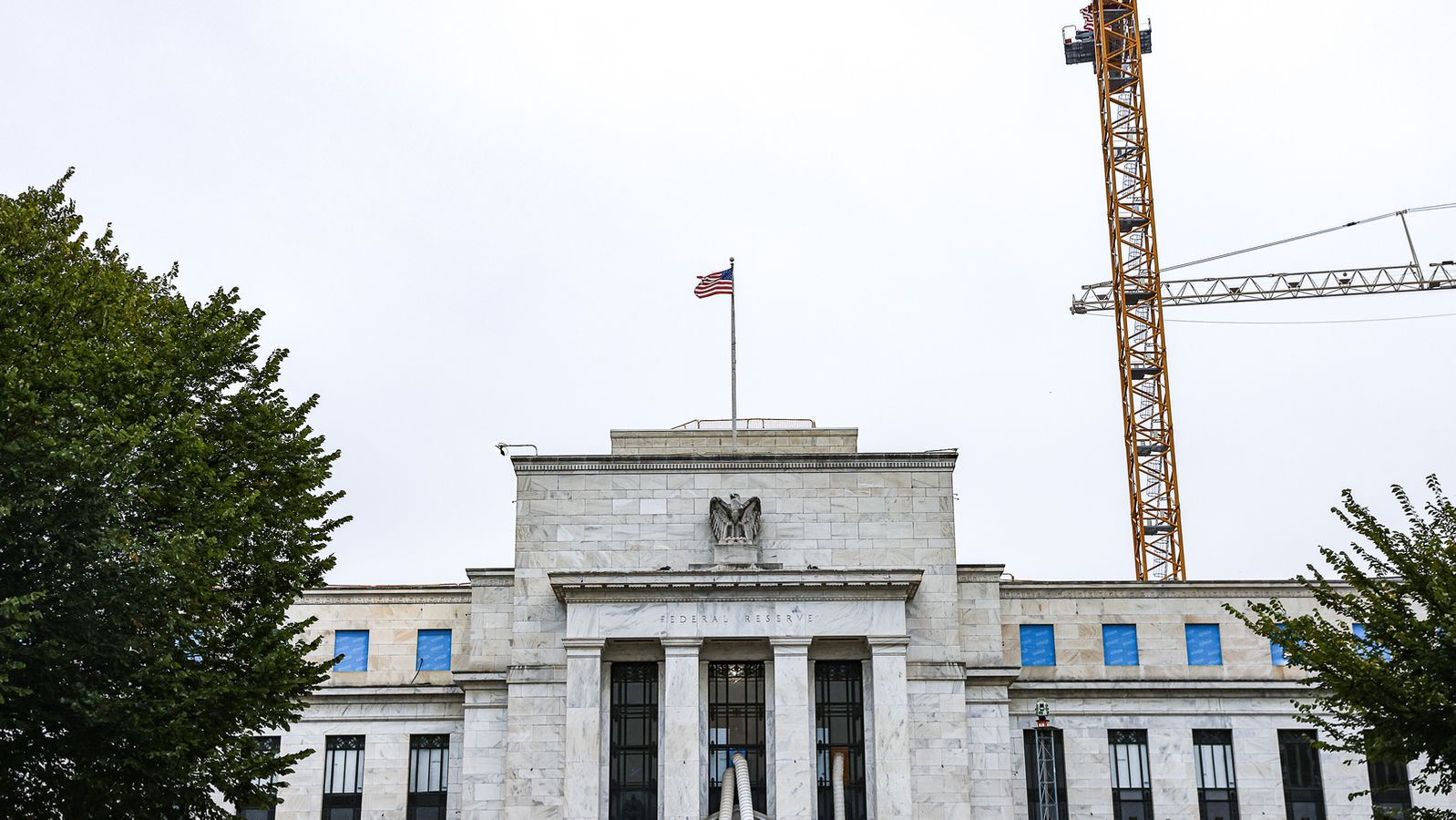
Goldman Sachs has delayed its expectation for a second Federal Reserve rate hike from October to December, citing core PCE inflation data that arrived softer than anticipated. While the bank maintains a December increase in its base case, analysts now see a mounting possibility that the FOMC will forgo further tightening.