Cryptocurrency

Metaplanet pivots to Bitcoin banking with Siiibo acquisition
With the 2.1 billion JPY acquisition of Siiibo Securities now finalized, Metaplanet has launched a regulated subsidiary to transform its Bitcoin treasury into a financial engine. Metaplanet Securities will operate under a Type I Financial Instruments Business Operator license, signaling a shift from simple asset holding to complex credit engineering.

SBI Holdings partners with Solana to build Japanese onchain market
Japan’s financial powerhouse SBI Holdings and the Solana Foundation have unveiled a strategic alliance to integrate regulated institutional finance with decentralized blockchain infrastructure. The collaboration, announced July 13, aims to position Japan as a regional hub for stablecoin issuance, tokenized securities, and cross-border payment systems.

Thai Regulators Target USDT Transfers in Shadow Economy Crackdown
Thai financial authorities have launched an investigation into high-volume stablecoin transactions, citing concerns that users are actively bypassing mandatory reporting channels. The Bank of Thailand and the Securities and Exchange Commission are now employing data analytics to trace suspicious activity linked to Tether’s USDT and potential illicit finance.

Ripple joins UK push for £33 billion tokenization overhaul
A newly formed UK taskforce is moving to shift wholesale financial markets toward tokenized infrastructure, with Ripple among the key industry participants. The strategy aims to integrate digital assets into the nation's capital markets, targeting a live repo transaction test by the spring of 2027.

Circle targets South Korean financial sector with exclusive Seoul event
Circle is deepening its footprint in South Korea, preparing an invitation-only industry summit in Seoul on July 23. The event at Josun Palace, titled “Korea at a Crypto Inflection,” aims to bridge the gap between global stablecoin infrastructure and the local ecosystem of banks, crypto exchanges, and payments firms.

Bitcoin Faces Volatility as Economic Data and Geopolitical Risks Converge
Bitcoin hovers near $62,800 this week as markets brace for a barrage of inflation reports, bank earnings, and escalating tensions in the Strait of Hormuz. With the asset struggling to break through $65,000, these upcoming catalysts threaten to either solidify its current support or spark a deeper correction.

SBI targets 3% yield for JPYSC stablecoin lending
A 3% annual yield is set to debut for holders of JPYSC, Japan’s first trust bank-backed yen stablecoin. According to reports from Nikkei, the financial giant SBI Holdings plans to roll out this fixed-term lending service through its crypto exchange, SBI VC Trade, as early as this month.

Turkey charges 504 in billion-dollar crypto laundering scheme
Turkish prosecutors have leveled charges against 504 individuals for operating an expansive money laundering network that funneled nearly 40 billion liras through shell companies, jewelry stores, and cryptocurrency exchanges. The operation, allegedly fueled by illicit betting proceeds, used a proprietary digital platform to mask the movement of funds abroad.

Tom Lee highlights ETH/BTC ratio as potential crypto market signal
Fundstrat co-founder Tom Lee is directing investor attention toward the Ethereum-to-Bitcoin ratio, framing the metric as a primary indicator for a broader market recovery. Speaking ahead of his appearance at the WebX 2026 conference in Tokyo, Lee identified the pair’s performance as a potential catalyst for renewed digital asset momentum.

China Proposes Legislative Overhaul to Combat Crypto Money Laundering
Prosecutors and legal scholars in China are pushing for a sweeping reform of the nation's judicial framework to better track, seize, and liquidate virtual assets. The proposal targets deep-seated loopholes that currently hinder the prosecution of complex money laundering schemes involving anonymous wallets and cross-border blockchain transactions.

Senate Democrats Demand Probe Into Trump’s $1.4 Billion Crypto Ties
A coalition of senior Democratic senators is demanding formal hearings into President Trump’s cryptocurrency holdings, citing $1.4 billion in earnings from ventures like World Liberty Financial. The push comes as lawmakers prepare for a critical vote on the CLARITY Act, heightening concerns over potential conflicts of interest in digital asset regulation.
Bitcoin Holds $62K Support as ETF Flows Break Eight-Week Slump
Bitcoin maintains a precarious hold above $62,000, defying broader market volatility triggered by renewed U.S.-Iran hostilities. While traditional assets like Asian equities and gold faced sharp corrections amid rising oil prices, the leading cryptocurrency found a rare lifeline through a reversal in institutional sentiment.
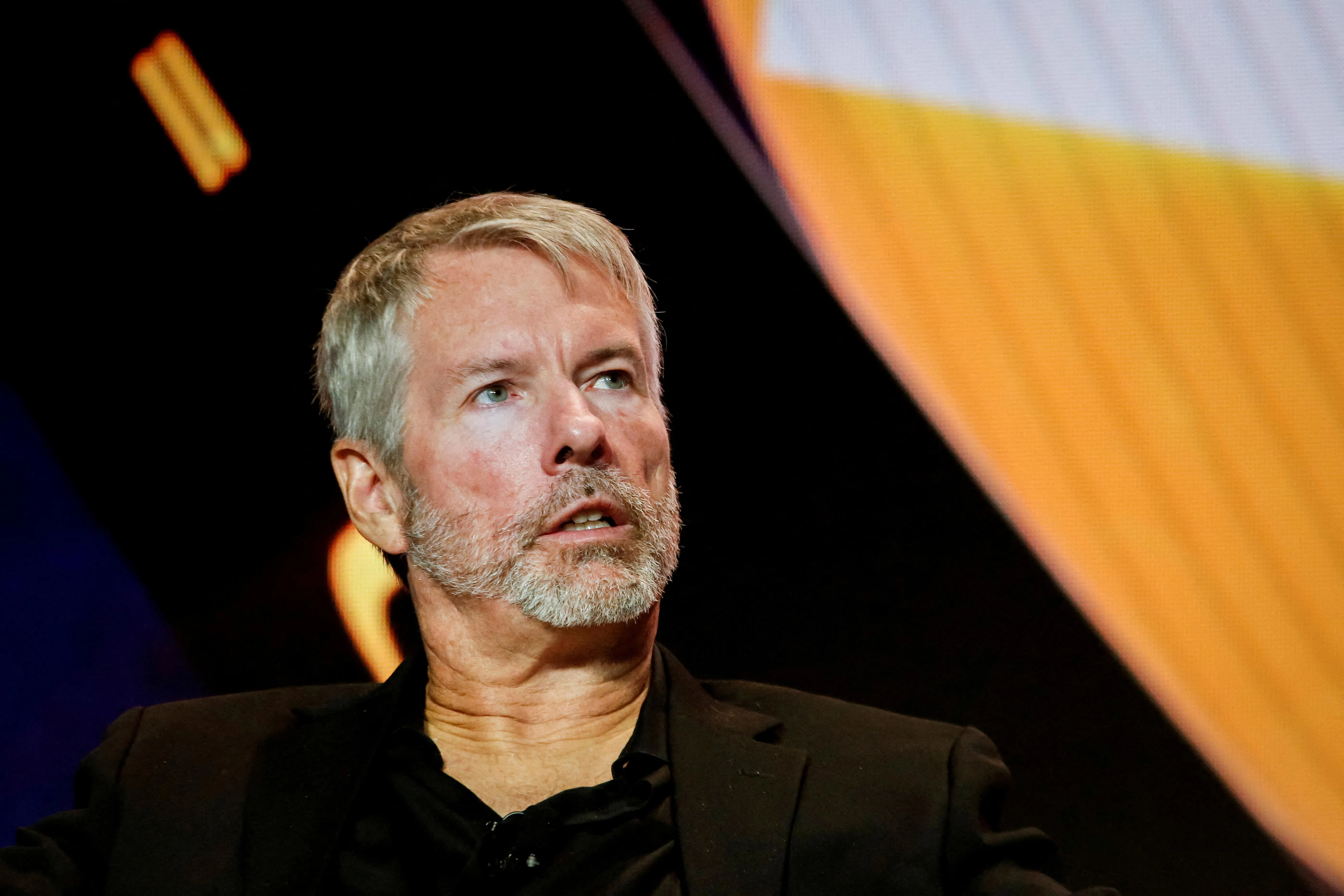
Ross Gerber Challenges Michael Saylor’s Bitcoin Treasury Strategy
Ross Gerber, chief executive of Gerber Kawasaki, has intensified his critique of Michael Saylor, accusing the MicroStrategy founder of undermining Bitcoin through a leveraged financing model. Gerber claims the company’s reliance on debt to fund Bitcoin acquisitions and dividend payments creates unnecessary selling pressure rather than sustainable value.
How 75,000 XRP Holders Backed Ripple Through SEC Litigation
John Deaton credits 75,000 XRP holders with providing the critical support necessary for Ripple executives to mount a defense against the U.S. Securities and Exchange Commission. This grassroots involvement helped the company avoid an early settlement, ultimately preserving hundreds of jobs despite the intense regulatory pressure faced by leadership.
Evernorth Establishes Japanese Presence Amid $1B Treasury Push
Evernorth has launched a Japanese-language communications channel, signaling a strategic focus on a market long defined by its early adoption of XRP. While the move deepens ties to an ecosystem dominated by SBI Holdings, the firm maintains that its current footprint remains centered on information rather than an operational office.

Progmat Migrates ¥452 Billion in Tokenized Assets to Avalanche
Japan’s leading security-token platform, Progmat, has finalized the migration of its entire portfolio to a dedicated Avalanche Layer 1 network. The transition moves over ¥452 billion in underlying assets and issued securities from Corda 5 to an EVM-compatible architecture, aiming to boost operational efficiency for regulated financial products.

Japan Doubles Down on Web3 as PM Takaichi Targets Startup Growth
Ten trillion yen in annual startup investment by 2027 remains the core objective for Japan, as Prime Minister Sanae Takaichi signaled a continued commitment to regulatory reform and capital access during a video address to 15,000 attendees at the WebX 2026 conference in Tokyo.

American Bitcoin Shares Crater 95%, Wiping $600M from Eric Trump’s Stake
A relentless slide in American Bitcoin stock has erased more than 95% of its peak value, stripping roughly $600 million from the stake held by Eric Trump. Despite the firm aggressively expanding its treasury to over 8,000 BTC, persistent selling pressure continues to dismantle investor confidence in the Nasdaq-listed miner.

Lawson to Pilot POS-Integrated Stablecoin Payments in Tokyo
Beginning in early August, Japanese convenience store chain Lawson will initiate the nation’s first point-of-sale integrated trial for the yen-denominated JPYC stablecoin. The test, hosted at the Takanawa Gateway City location in Tokyo’s Minato Ward, seeks to bridge digital asset payments with standard retail infrastructure.

Stablecoin market retreats as liquidity drains from major tokens
A $10 billion contraction in stablecoin supply since May has signaled the largest monthly decline since the 2022 collapse of TerraUSD. With $7.7 billion in redemptions occurring in June alone, the market is grappling with a cooling in institutional demand that mirrors the recent outflows from spot Bitcoin ETFs.

Pakistan’s Crypto Regulator Seeks Nuance Amid Shariah Ruling
Conflict emerged between Pakistan’s digital asset authorities and prominent religious scholars after a June ruling declared cryptocurrency transactions impermissible. Bilal bin Saqib, chairman of the Virtual Assets Regulatory Authority, is now pushing for granular technical and Shariah reviews to bridge the gap between emerging blockchain technology and traditional Islamic jurisprudence.

Ethereum energy consumption drops 99.9% following PoS transition
The Cambridge Centre for Alternative Finance reports that Ethereum now consumes just 7.87 gigawatt-hours annually, marking a 99.9% reduction in power demand since the 2022 Merge. By replacing energy-intensive mining with a validator-based system, the network has transitioned from a global power consumer to a model of comparative efficiency.
Thailand tightens oversight on USDT trades and cash deposits
Regulators in Thailand are moving to close loopholes in capital flow monitoring by targeting large cash deposits and high-value USDT transactions. Starting in the fourth quarter of 2026, depositors moving 5 million baht or more must provide documented proof of funds, a measure designed to curb illicit financial activity.
BlackRock’s BUIDL Fund Hits $900M on Avalanche
The USD Institutional Digital Liquidity Fund, known as BUIDL, has surged to $900 million in assets on the Avalanche blockchain. This 105% weekly increase, which added roughly $436 million to the network's allocation, highlights a rapid institutional shift toward tokenized U.S. Treasuries across diverse decentralized environments.

Michael Saylor defines Bitcoin power dynamics amid BIP 110 friction
Michael Saylor has framed Bitcoin as a decentralized system held in dynamic equilibrium by three distinct pillars: wallets, nodes, and miners. His definition arrives as the network faces a contentious test of its governance model through BIP 110, a proposed soft-fork that has sparked significant disagreement among industry leaders.

Coinbase and Senator Warren Clash Over CLARITY Act Security Risks
As the Senate approaches a critical vote on the CLARITY Act, a sharp divide has emerged over whether the legislation bolsters national security or creates dangerous loopholes. Coinbase Chief Policy Officer Faryar Shirzad and Senator Elizabeth Warren are currently locked in a public dispute regarding the bill’s impact on sanctions enforcement.

SBI Leads $76 Million Investment in Institutional Crypto Exchange EDX
Japan’s SBI Holdings has injected $76 million into EDX Markets, marking a significant push to scale institutional-grade crypto infrastructure. The Chicago-based exchange plans to deploy the capital to accelerate global product development, bolster clearing and settlement services, and secure a national trust bank charter in the United States.

Oracle Flaw Costs Bonzo Lend Over $9 Million
An attacker siphoned $9.05 million from the Hedera-based Bonzo Lend protocol on July 11, 2026, by exploiting a vulnerability in a third-party oracle. By submitting a zeroed signature to Supra’s verification system, the perpetrator artificially inflated the price of SAUCE tokens to borrow massive amounts of USDC and wrapped HBAR.

Adam Back and Michael Saylor warn of chain split over BIP 110
The proposal to implement BIP 110, a temporary soft fork for Bitcoin, has triggered a sharp rebuke from industry stalwarts Adam Back and Michael Saylor. Both argue that the plan, which seeks to restrict large data fields within transactions, undermines the foundational principles of a permissionless and decentralized network.

Ripple CEO reveals near-collapse during SEC litigation
Faced with the overwhelming legal machinery of the U.S. Securities and Exchange Commission, Ripple leadership once stood on the brink of total dissolution. CEO Brad Garlinghouse recently disclosed that the company seriously weighed liquidating its XRP holdings and shutting down operations entirely to avoid a protracted, resource-draining battle.