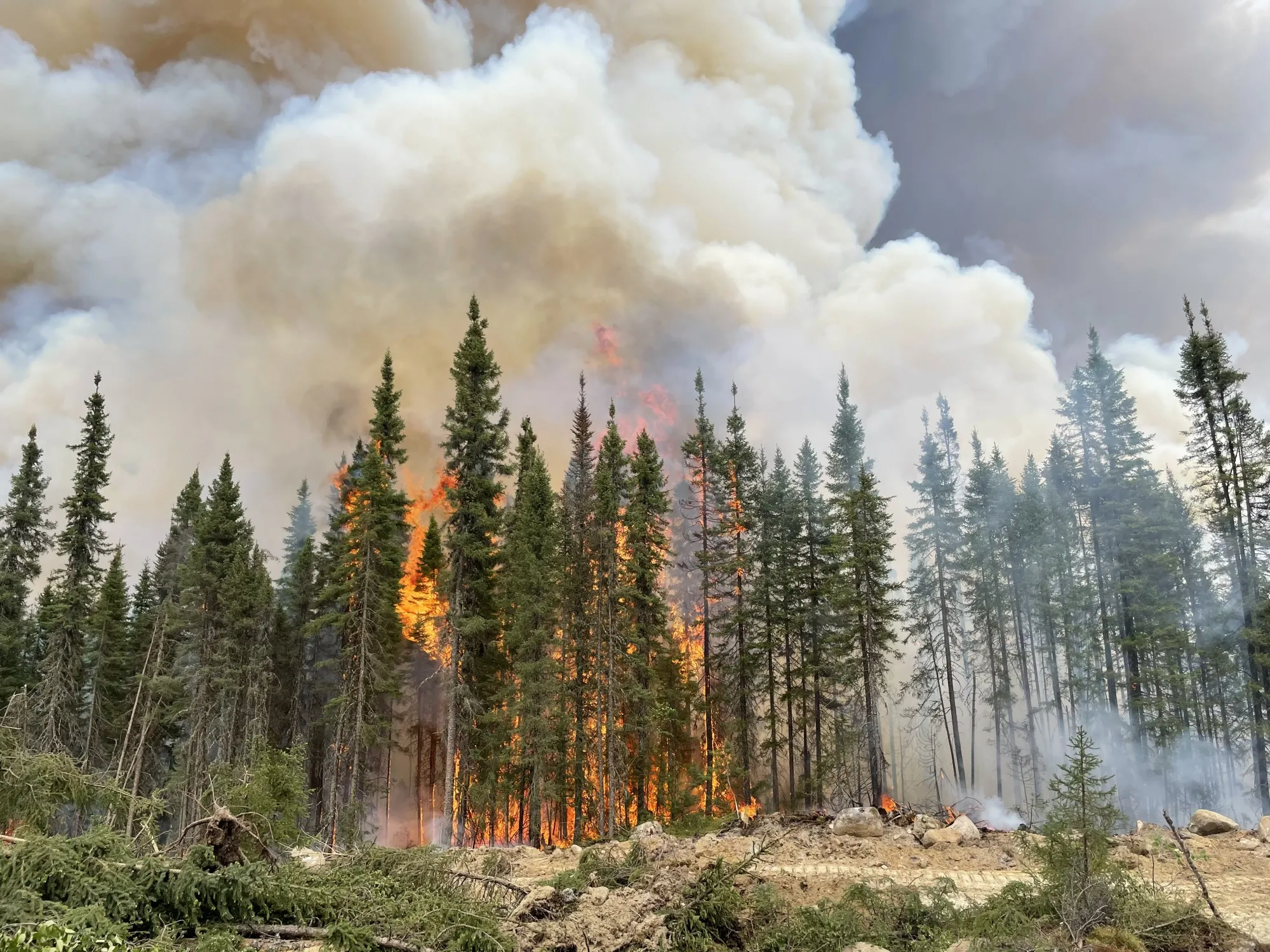
Between May and July, Canada experienced its warmest weather since 1940. By August 16, the government reported 5,753 active fires that incinerated 13.7 million hectares of land—a 602% increase over historical norms. These fires have claimed at least 17 lives, destroyed 200 buildings, and forced more than 150,000 people to evacuate their homes.
The analysis, conducted by researchers from Canada, the U.K., and the Netherlands, focused on the severity of fires in eastern provinces. Scientists found that the season’s intensity was 50% higher than it would have been in a world without greenhouse gas emissions. Yan Boulanger, a research scientist at Natural Resources Canada, described the findings as shocking, noting that the data now provides a clear quantitative link between fossil fuel consumption and the escalation of fire-prone weather.
Beyond the immediate destruction of forest and property, the smoke blanketed major cities including Ottawa, Toronto, and New York, pushing air quality indexes to dangerous levels. The study warns that unless global temperature increases are curbed, these extreme fire seasons will transition from rare anomalies into a recurring reality.
Comments (0)
No comments yet. Be the first!